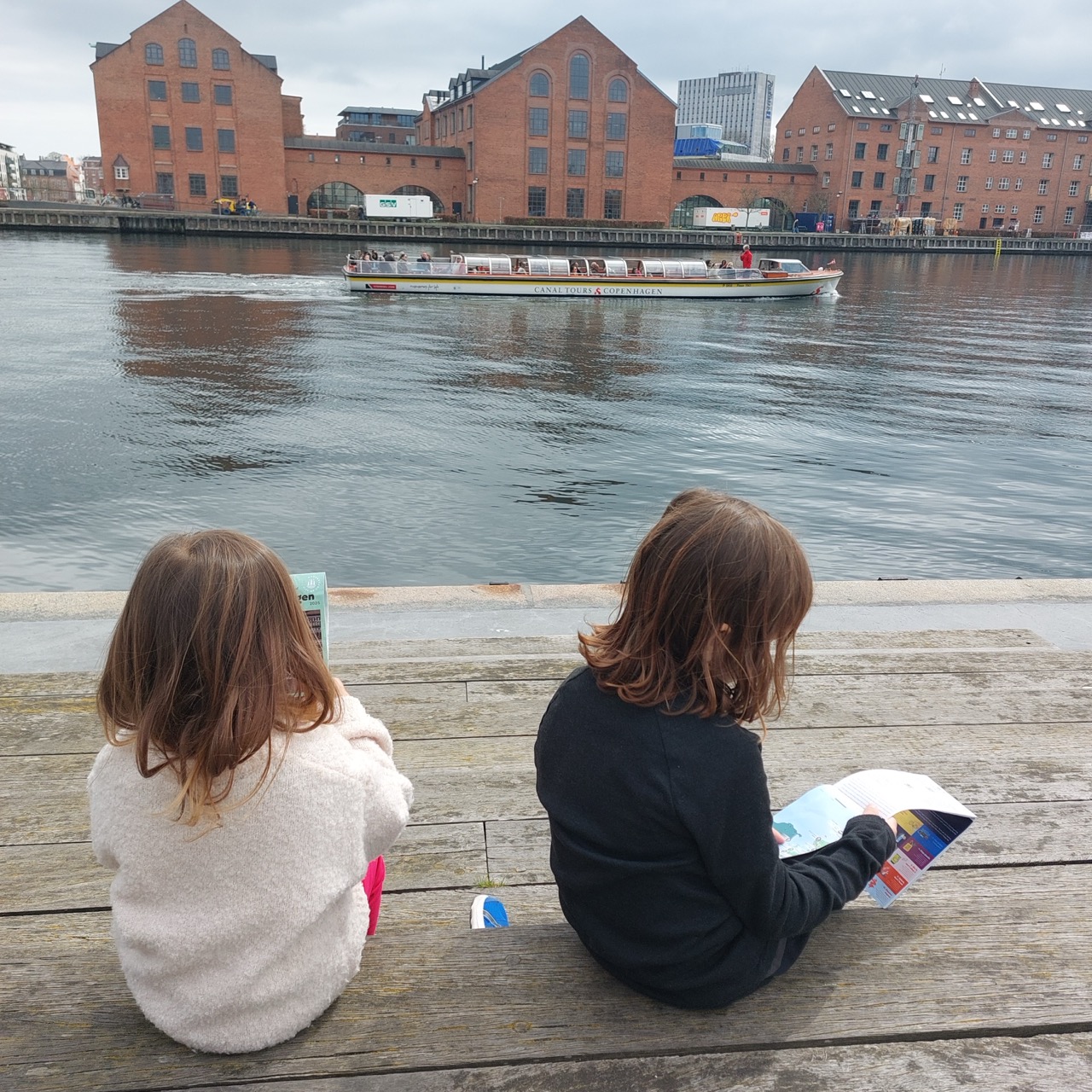
Copenhagen with kids — the perfect city for itFour days in mid-April with a four-year-old and a seven-year-old, mostly on two wheels
A small city with the airport ten minutes from the centre, no cars in your face, bike lanes wide enough for a cargo bike and a rain shower, and enough for kids to do that we ran out of days before we ran out of ideas.
📖 7 min read🗓️ April 2026📍 Copenhagen, Denmark
Copenhagen is one of those cities where the trip pretty much plans itself. You land, you get to the centre in ten minutes, you rent a bike, and you go. There is very little to complicate the day: no traffic to speak of, no exhaust, no scramble for a car park, no reason to worry every time the kids drift a metre ahead of you.
We spent four days there in mid-April with our four-year-old and seven-year-old, based in a small hostel-hotel one street back from the central station. This is what worked, what didn't, and what we'd do again.
Why Copenhagen works with kids
It's small. The airport is 10–15 minutes from the centre by train
No pollution, no traffic. Air feels clean, streets are calm
Bikes everywhere, safely. You can move around on a bike or any small motorised thing without feeling like you're taking a risk
People are friendly. Kids on the sidewalk are treated as regular humans, not obstacles
Picnics are welcome in most public spaces — bring your lunchbox and sit somewhere nice
A few honest downsides too: there aren't as many proper playgrounds as you'd expect for such a family-friendly city, the weather can turn on you (April is definitely a raincoat month), and if you want a good bike setup — especially a cargo with a rain cover — you have to book early. And you'll spend a small fortune on unreasonably good croissants along the way, which we count as a positive.
• • •
Where we stayed, and day one at Tivoli
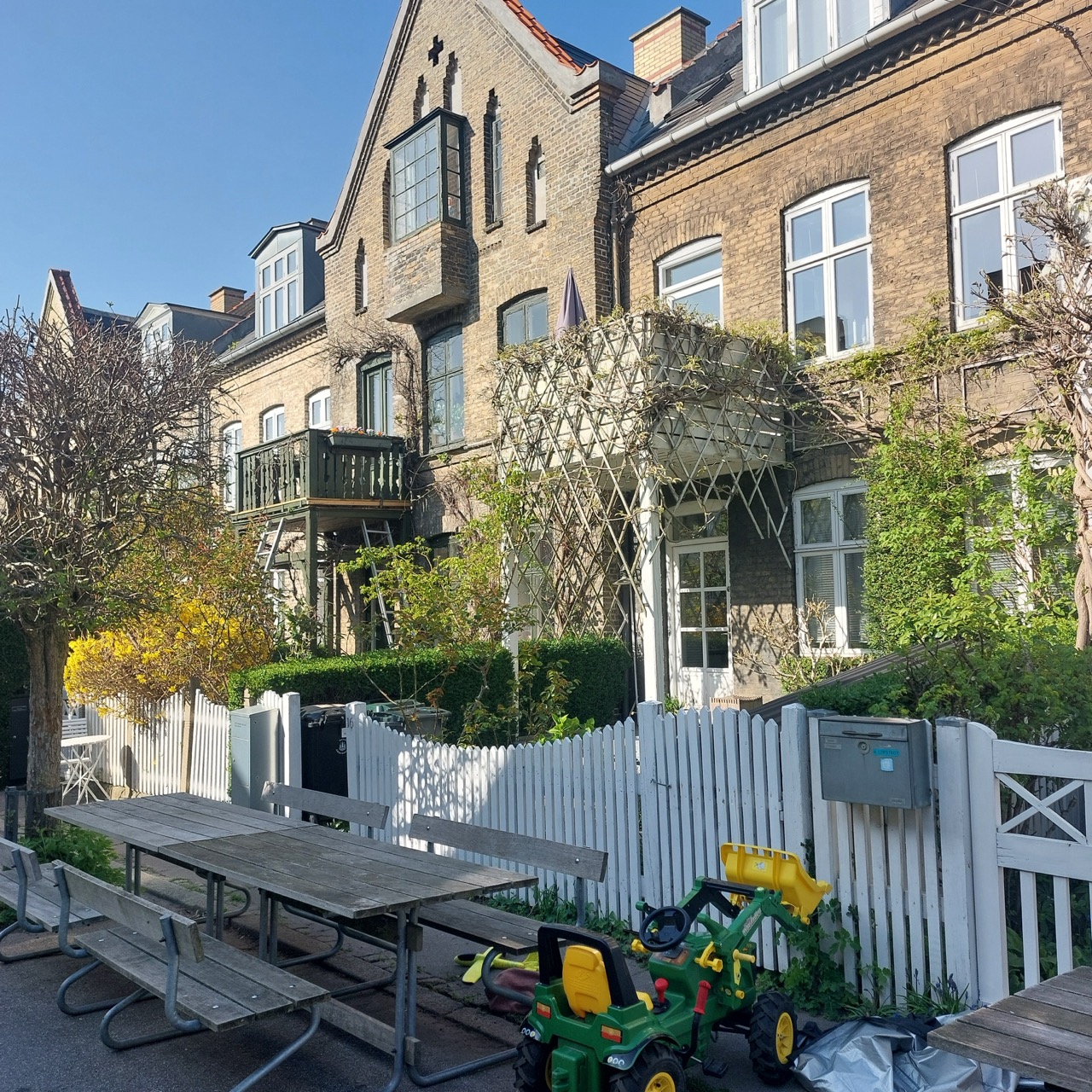
Our base was a hostel-style hotel in the centre — private room, private bathroom, but with a shared kitchen and communal spaces. It sat one street from the central station and about ten minutes' walk from Tivoli, which turned out to be the ideal setup: central enough to walk to everything, cheap enough to justify four nights, and — the two things I didn't expect — an indoor kids' play area and a lounge with live music in the evenings. Both saved our sanity on the rainy afternoon.
The shared kitchen also does something a normal hotel doesn't. You cook next to a family from Berlin one night, share a table with a Korean couple the next. The kids see that the world is bigger than their school, and grown-ups get a small reminder of the same thing. It only works if you're willing to be slightly out of your comfort zone — out of ease, out of box, as we say in Greek. If you are, it pays for itself in stories.
We hit Tivoli that same afternoon. It was already busy — it wasn't peak season, but this is one of the oldest amusement parks in the world and it doesn't really have a quiet day. The atmosphere is worth the ticket regardless: gardens, fairy-tale rides for the little one, proper coasters for the older kid, and every ten metres someone is playing music or juggling something.
Tivoli towards the end of the afternoon. The lights come on before the sky darkens; that half-hour is the best of the day.
• • •
The city on two wheels
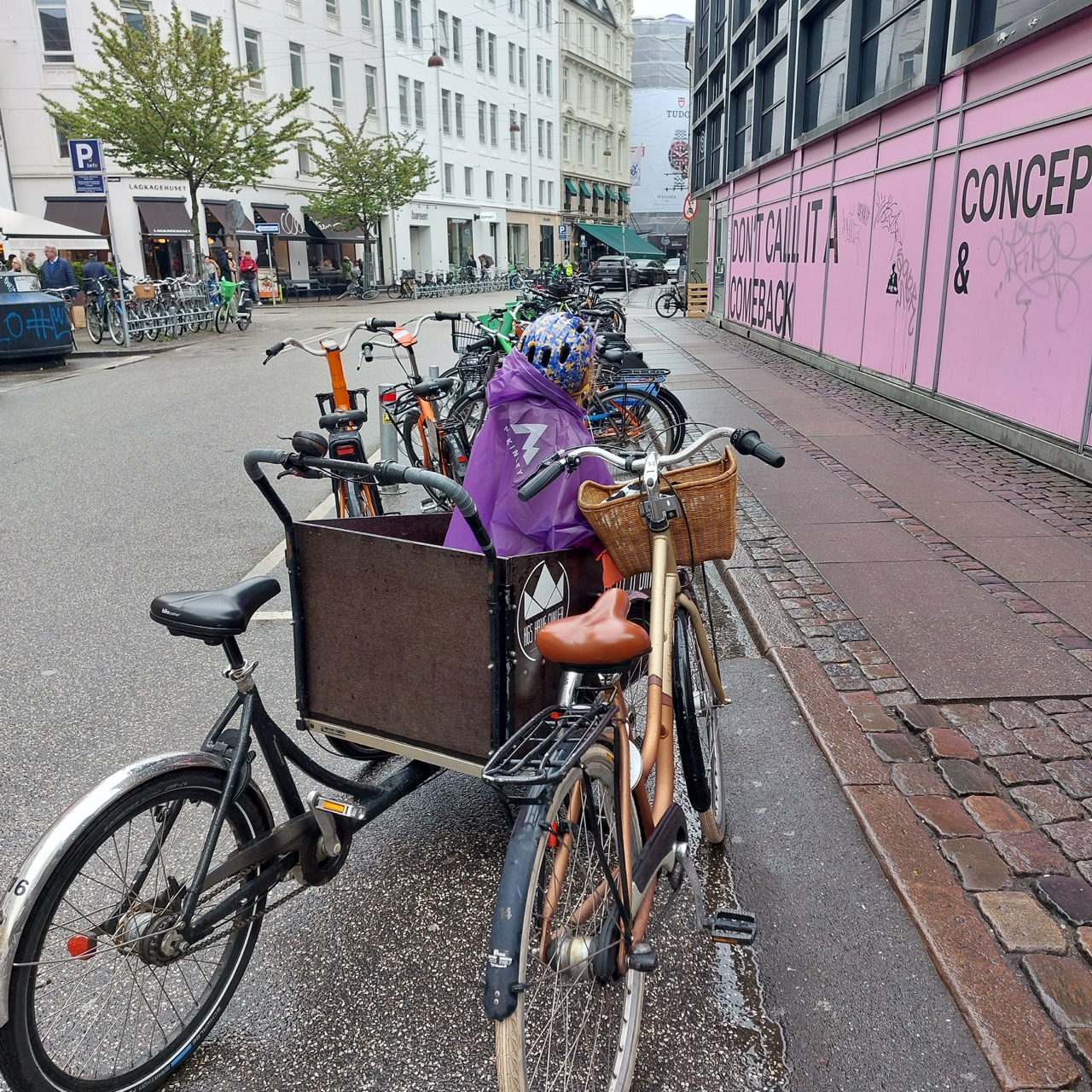
Day two we rented bikes. Lesson learned: don't wait until the day of. We hadn't pre-booked, and the cargo bike with a rain cover — the family-friendly one — was already gone. We ended up with an open-top cargo, put the kids in proper raincoats, and made peace with the fact that in April you don't outrun a Copenhagen shower, you just ride through it.
It didn't matter. The moment you're on a bike here you understand the city in a way walking doesn't give you. The bike lanes are their own street, wide, one-way, and everyone else on them knows the rules. Cars wait for you. Pedestrians look before they cross. You go from one side of town to the other in twenty minutes without touching a bus timetable or a map app.
By the second afternoon the seven-year-old was navigating; by the fourth day we were beating locals to green lights.
Any given railing in the centre. The city genuinely has more bikes than people.The open cargo we ended up with. Raincoats on, hoods up, and the four-year-old fell asleep somewhere between the second bridge and the third bakery.
• • •
The Planetarium, the Experimentarium, and a slight cherry-blossom detour
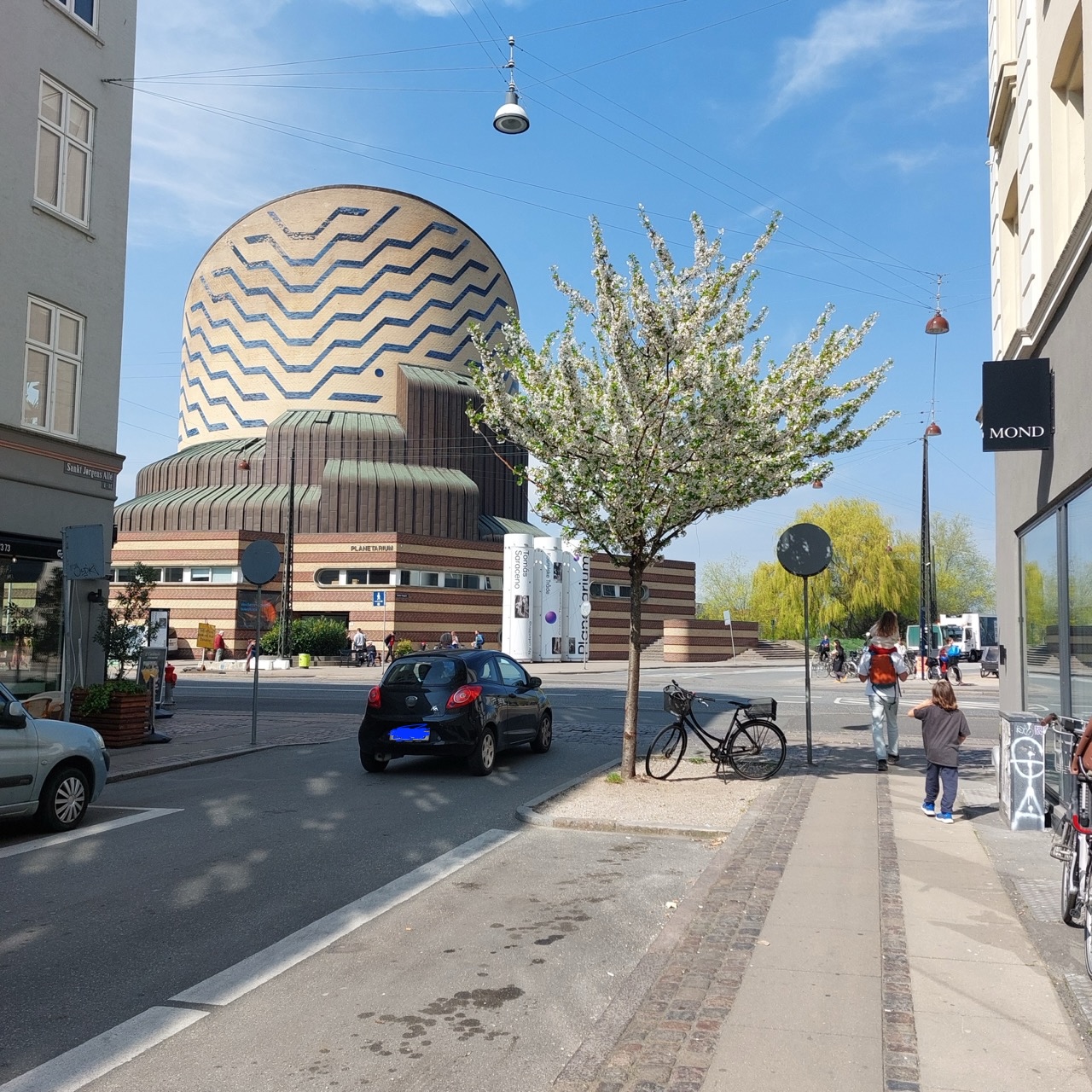
The Tycho Brahe Planetarium is a strange, brilliant cylindrical building right on the lake. Even if you skip the dome show, the café inside has some of the best sandwiches we ate all week — Denmark's reputation on that front is entirely earned — and you eat them at a window that looks straight out over the water.
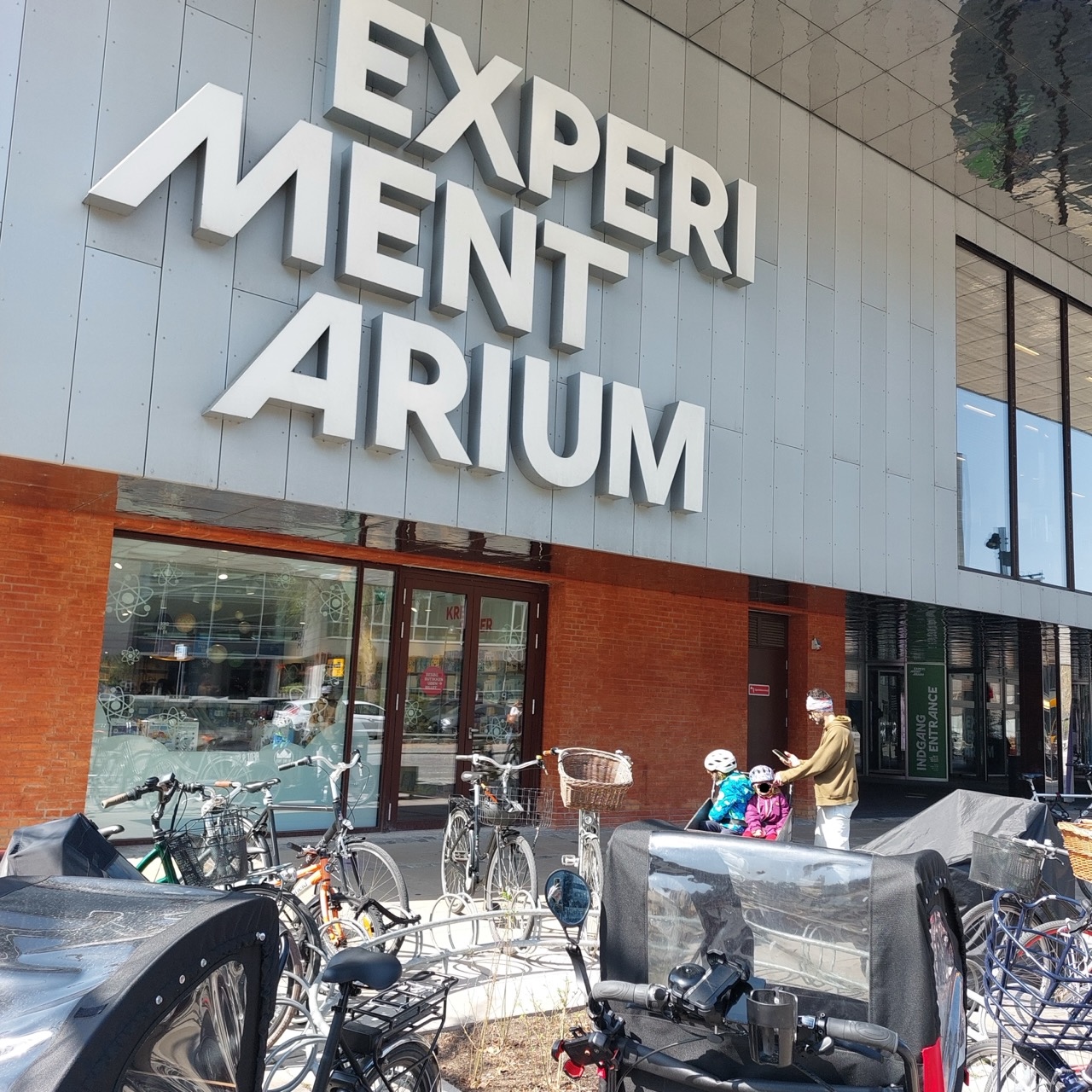
From there we cycled north to the Experimentarium, a modern hands-on science and technology museum with live demonstrations, workshops, and — the reason the kids still talk about it — a rooftop playground built out of gigantic Lego pieces. Two hours vanished up there.
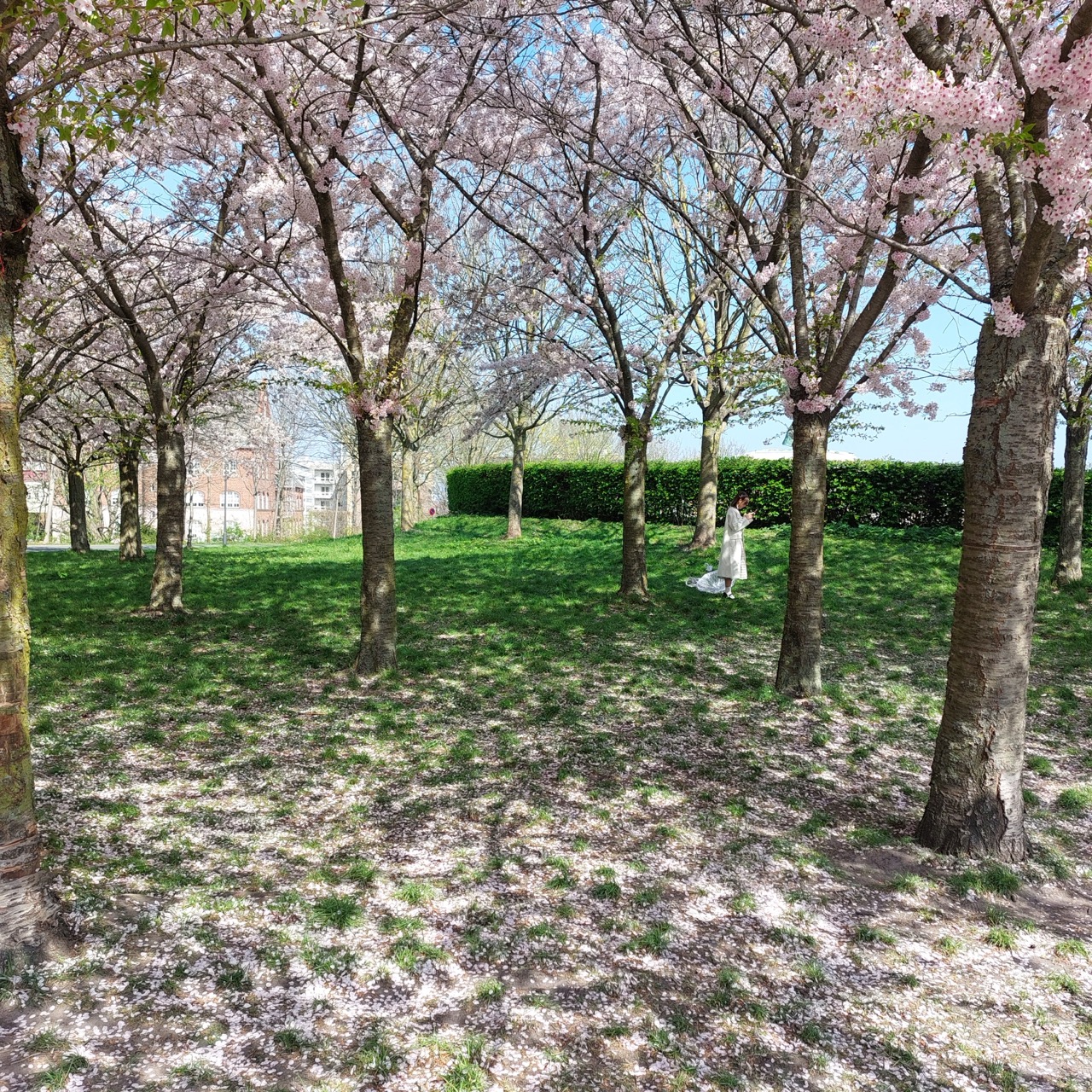
On the way back we made two stops: the Little Mermaid (it is small, everyone tells you this, they're right, you should still see it once) and Langelinie Park, which was in the middle of cherry blossom. Mid-April is peak. If you time it right, you get about five days of the whole city looking like a wedding.
The Planetarium from across the lake. That café at the ground level is where the sandwiches happen.The Experimentarium roof. That's the older one in the middle of what she's decided is her Lego tower.Langelinie Park in bloom. This lasts a week. We got lucky.The Little Mermaid, obligatory. Ten minutes, one photo, back on the bike.
• • •
Broens street food, and a Lego workshop at DAC
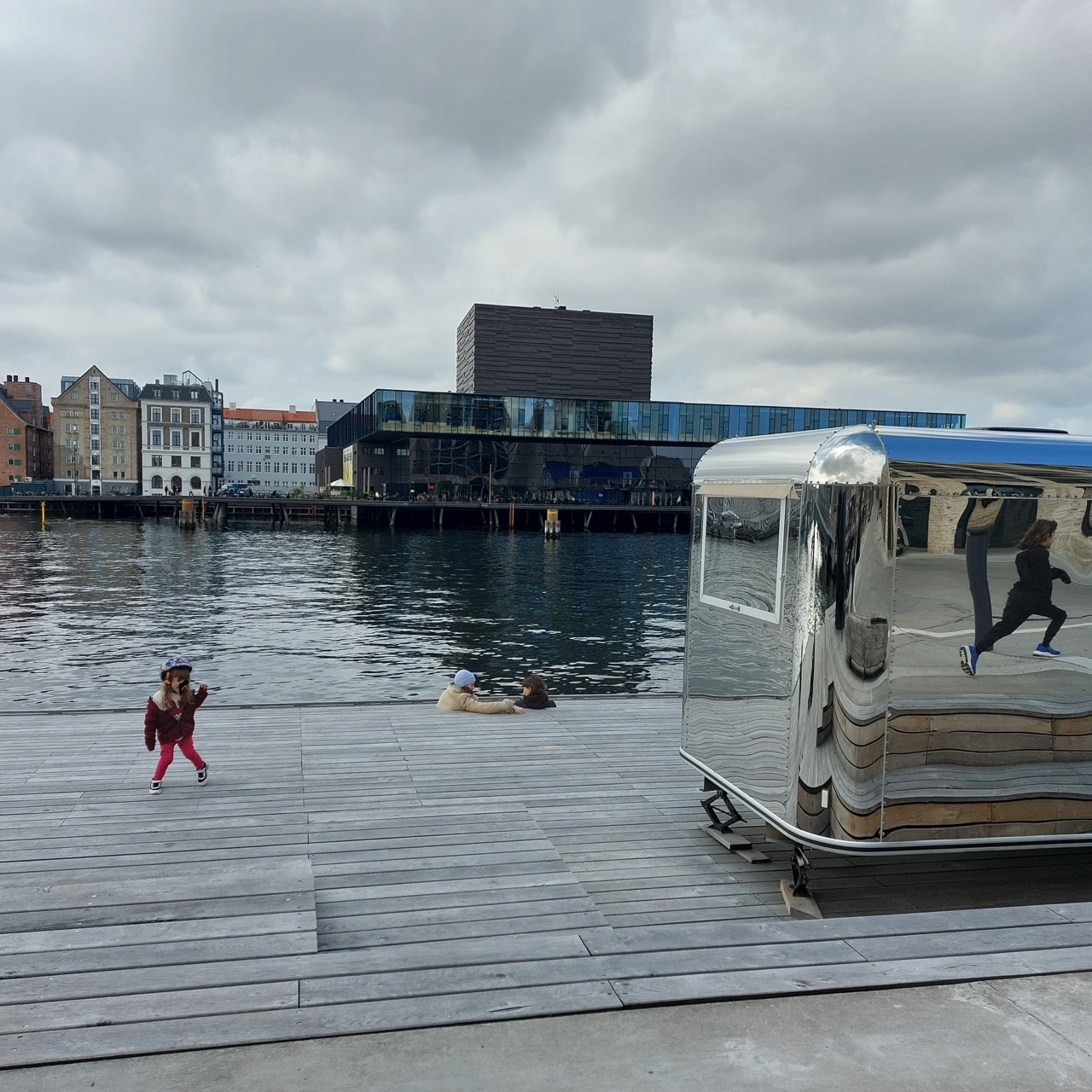
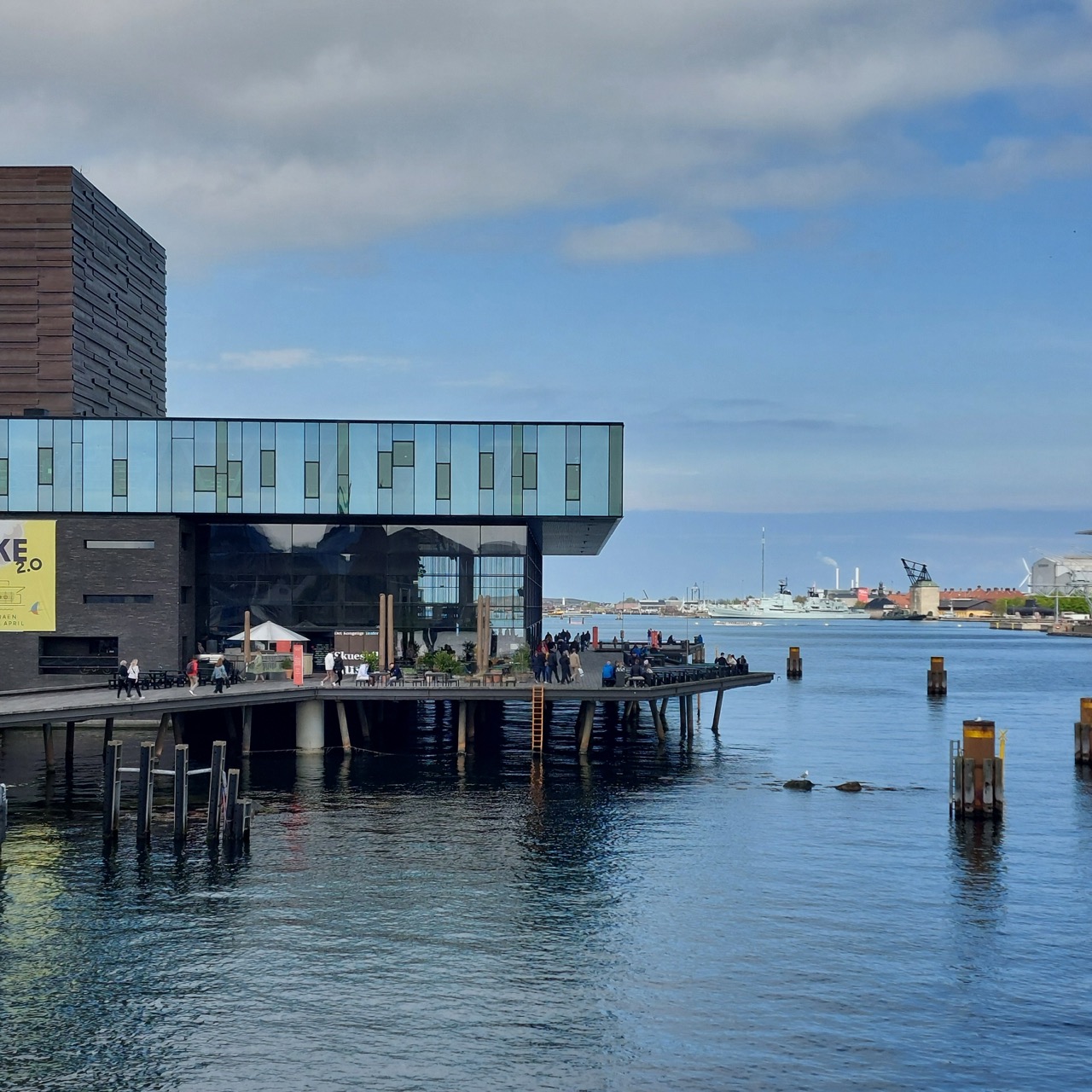
There are a few street-food halls in Copenhagen, and the one we kept coming back to was Broens Street Food — mostly for the location. It sits right on the harbour, with wildly different bits of architecture on every side, and after a long day of cycling it has the kind of stillness you didn't know you needed.
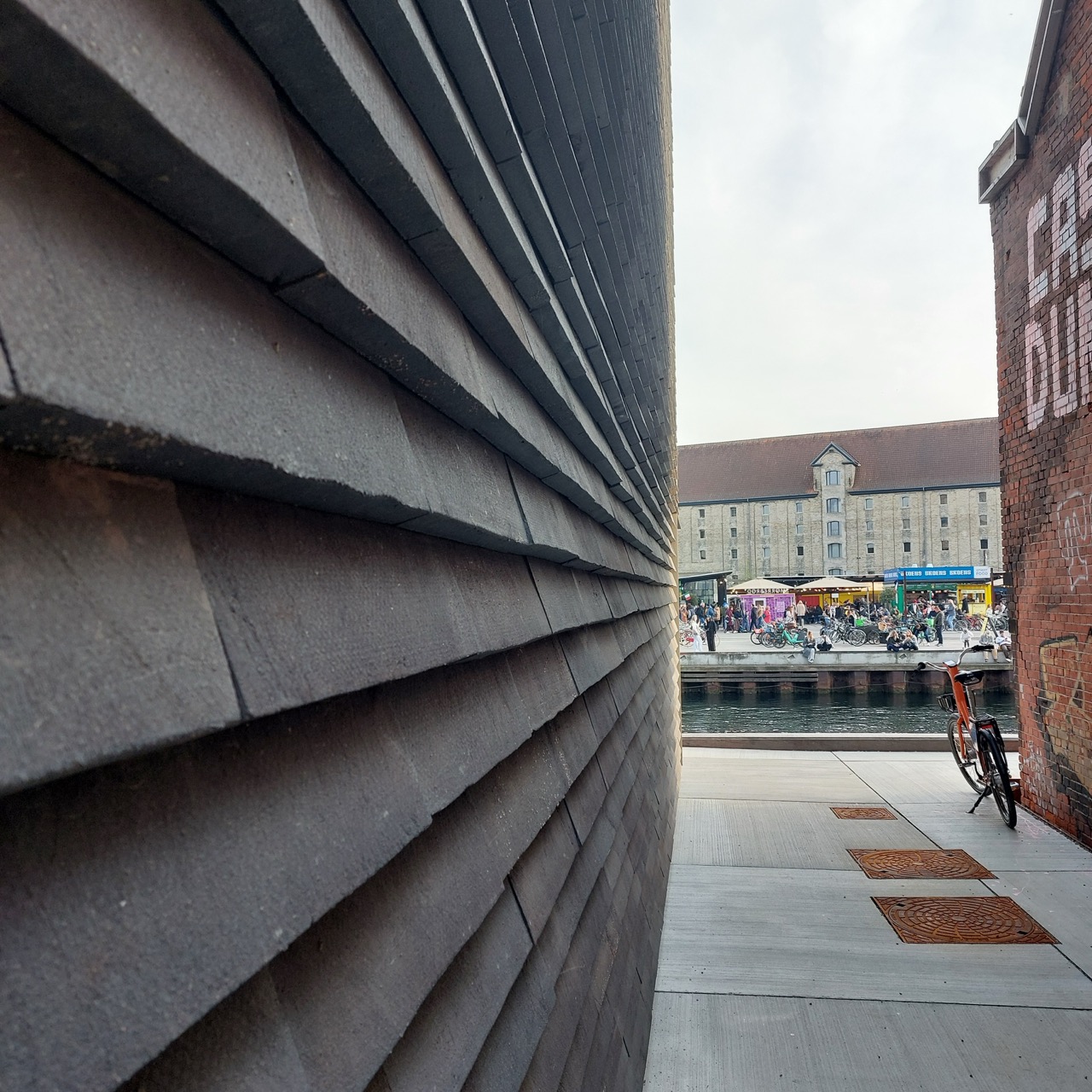
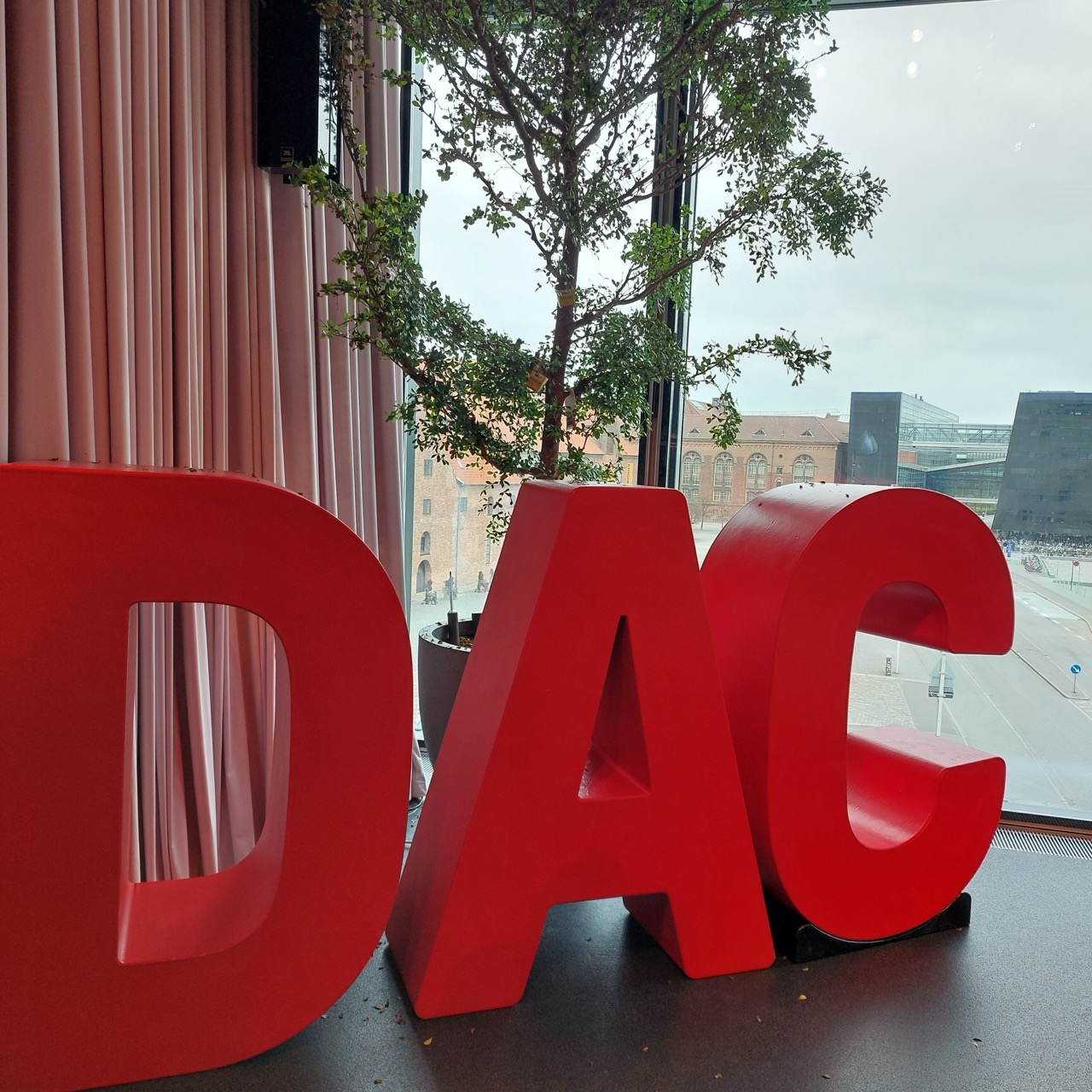
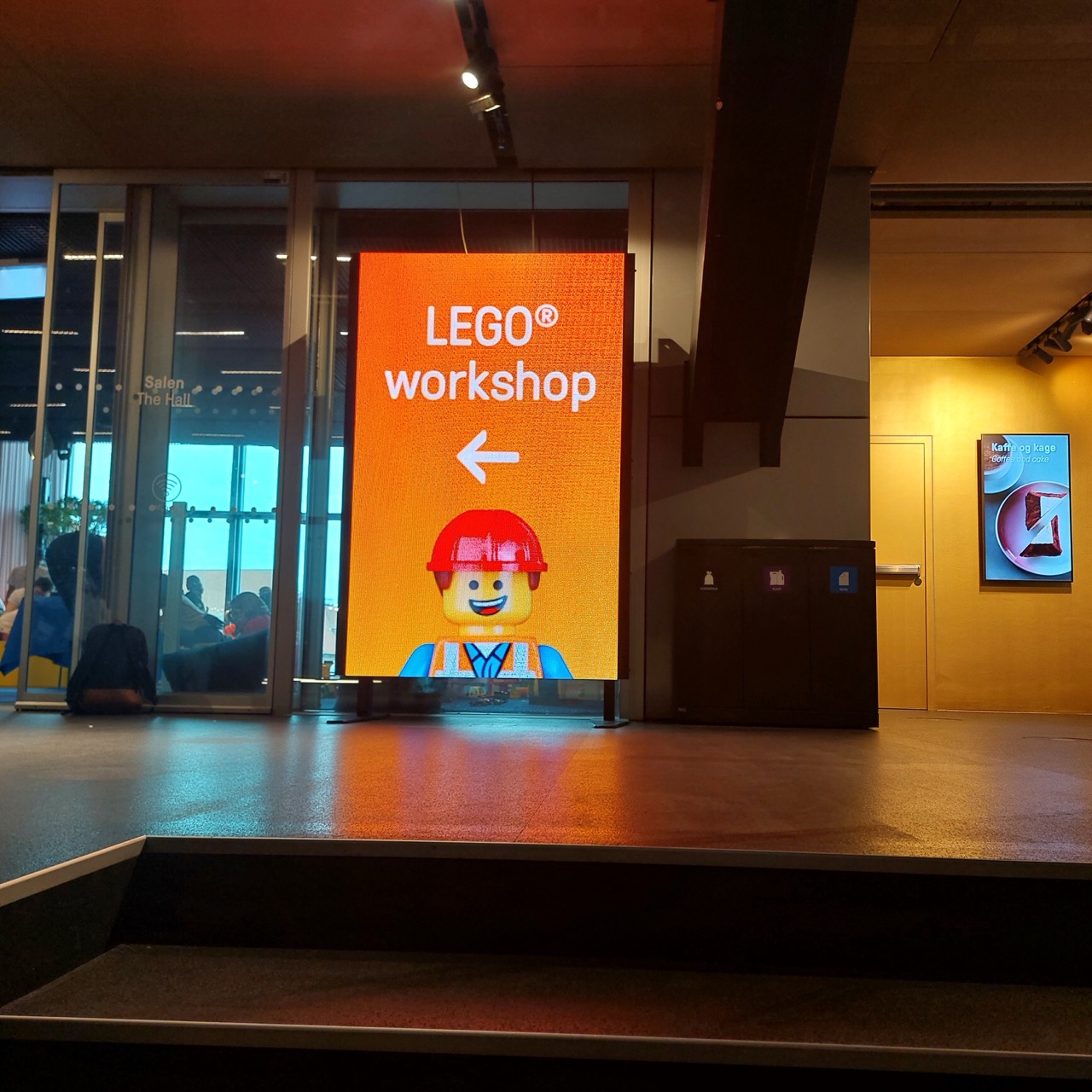
Half a kilometre away sits the Danish Architecture Center, a building near the Royal Library that you can't really miss. Beyond the main exhibitions, it runs free workshops for kids — and we got lucky and walked in on a Lego build workshop. On the top floor there's a restaurant with a proper kids' menu and a view of the entire city; on the way out, an indoor slide that dumps you back at ground level. If you make one museum stop with kids in this city, make it this one.
Broens, mid-afternoon. Warm bread, cold beer for us, a slightly suspicious sandwich for the little one, and the water right there.The DAC building. The slide is somewhere behind that wall.The Lego workshop we walked into by accident. The staff hand out the pieces, then leave the kids to it for an hour. This is where the seven-year-old announced she wanted to be an architect.
• • •
The National Gallery and the Botanical Garden
The Statens Museum for Kunst (SMK) — Denmark's national gallery — is worth a Saturday morning on its own. On weekends they run painting and clay workshops for kids, in dedicated spaces inside the museum, where children get to try the materials and messes that art actually involves. Entry is free for kids.
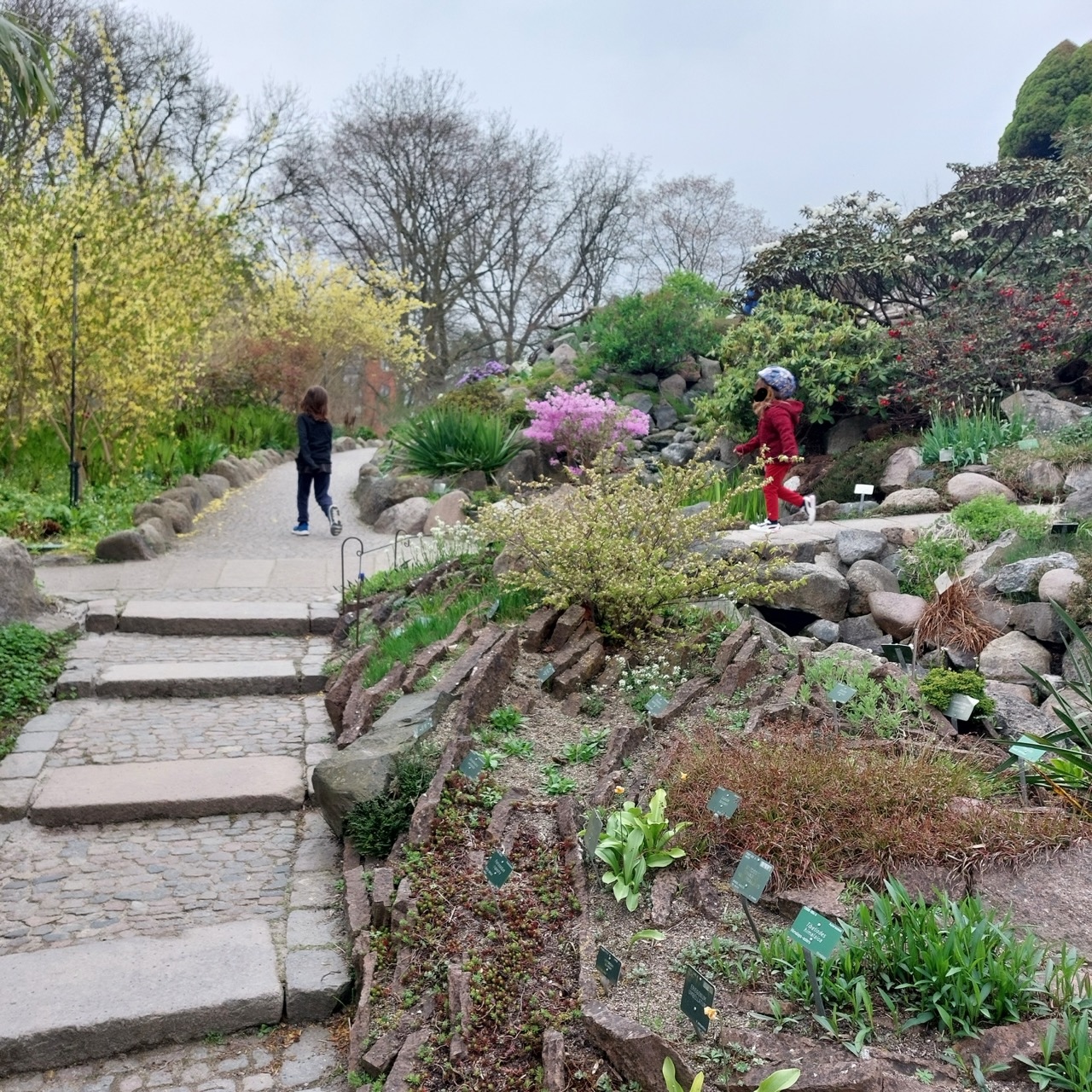
Right next to the gallery is the Botanical Garden, which we had underestimated. It's not a stop-off — it's a place to spend a slow hour or two. The glasshouses alone were worth the walk, and the paths outside are wide enough for two kids to run ahead without you flinching.
SMK from the park side. The workshop rooms are on the left as you enter.The palm house at the Botanical. Warm, humid, and enough taller-than-you plants to keep small people occupied for a proper while.
• • •
Reffen and the other side of the harbour
We saved our last day for the other side of the city — the piers and docks past Reffen Copenhagen Street Market. This is a different Copenhagen: harbour baths, floating swimming pools, houseboats, open-air art galleries, and — visible from a long way off — CopenHill, the city's landmark waste-to-energy plant with a ski slope on the roof.
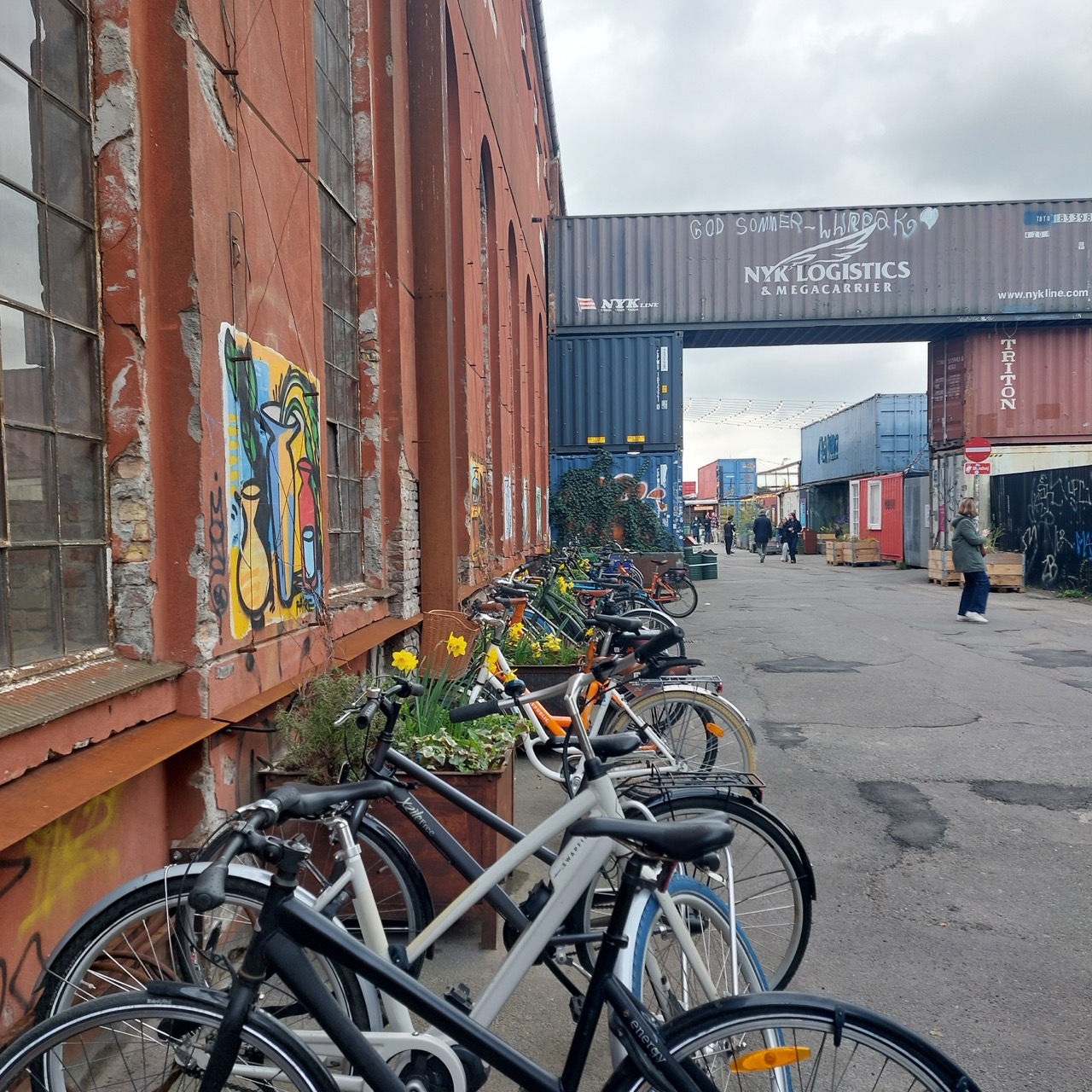
The ride out there is half the point. You go over bridges, past building sites that already look like sculpture, and the density falls away until you're at the water with more space than a city usually gives you. Reffen itself is a food-truck park in a converted industrial yard. It was a fitting last afternoon: hot food, cold wind off the harbour, and the kids running between the containers.
Reffen and beyond. The green ridge in the distance is the roof of CopenHill — yes, people ski down it.
• • •
Tips for a family trip to Copenhagen
What we'd tell anyone going
Get the Copenhagen Card if you plan to visit two or more museums — it also covers transport and pays for itself quickly with kids
Book bikes ahead of time — decide before you go: electric or not, cargo or not, rain cover or not. The good ones vanish first
Pack lunch. Picnics are welcome in almost every park, garden, waterfront and museum lawn. A cheap way to eat well
Try the cardamom croissant at any of the famous bakeries (Hart, Juno, Andersen & Maillard). Take one to the water and sit with it. That's the whole trip in ten minutes
Feel the city vibe by bike. Trains and buses work, but Copenhagen doesn't quite make sense until you're on two wheels
• • •
Why it works with kids
Copenhagen makes family travel feel like a version of ordinary life, only better. You wake up, you cycle somewhere, the kids see something they've never seen, you eat a good pastry, it rains for twenty minutes, you go inside a museum that wants you there, you come out to a park. Nobody honks at you. Nobody rushes you.
Four days felt short. Next time we'll book the cargo with the rain cover.
Tell Famila.Travel your dates and your kids' ages — it'll build an itinerary that hits the Experimentarium, the DAC workshop, the harbour baths and the best cardamom croissants, all in the right order.