
TinosGreek Island Life
The Greek island that lets families truly unwind
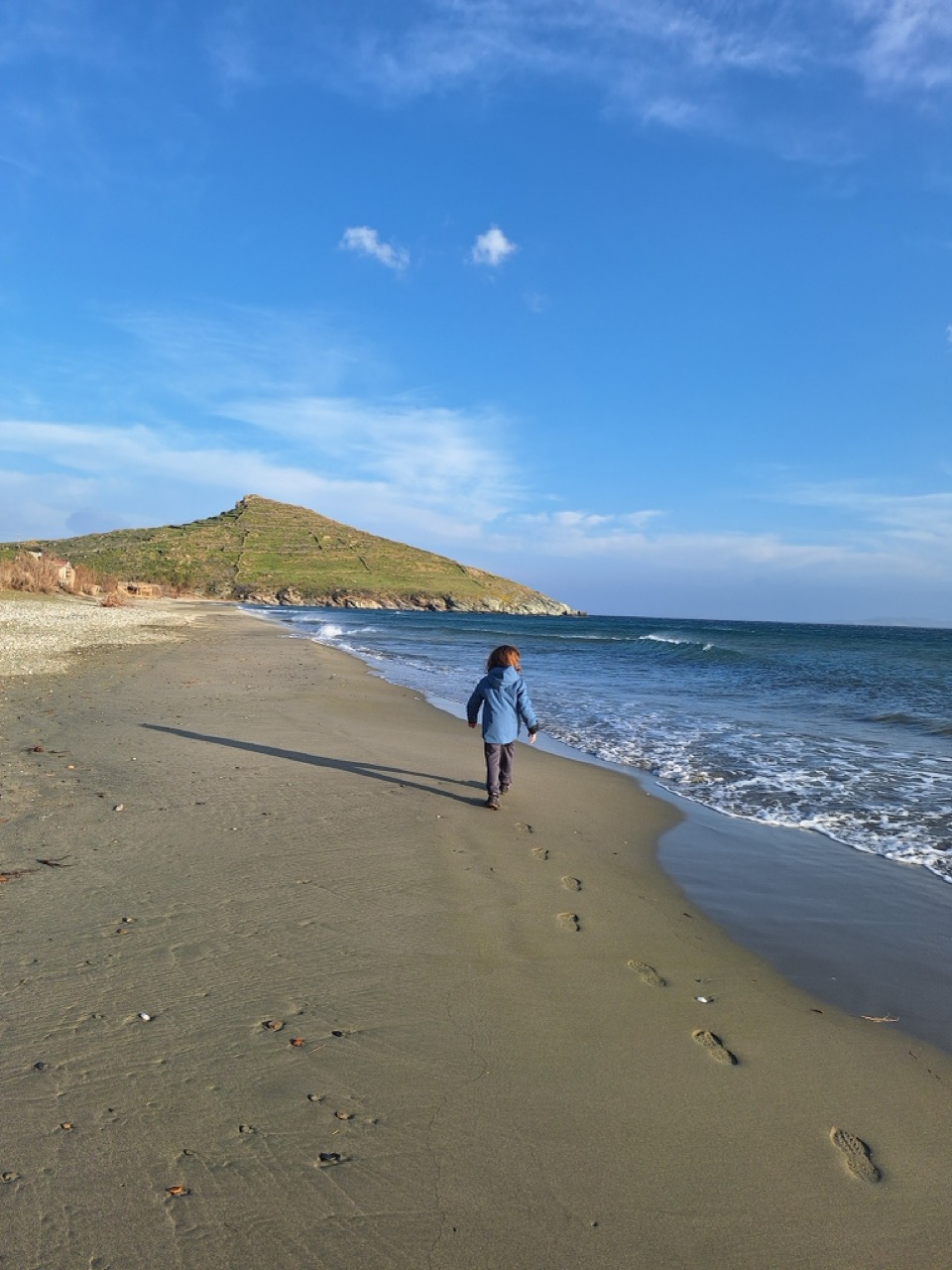
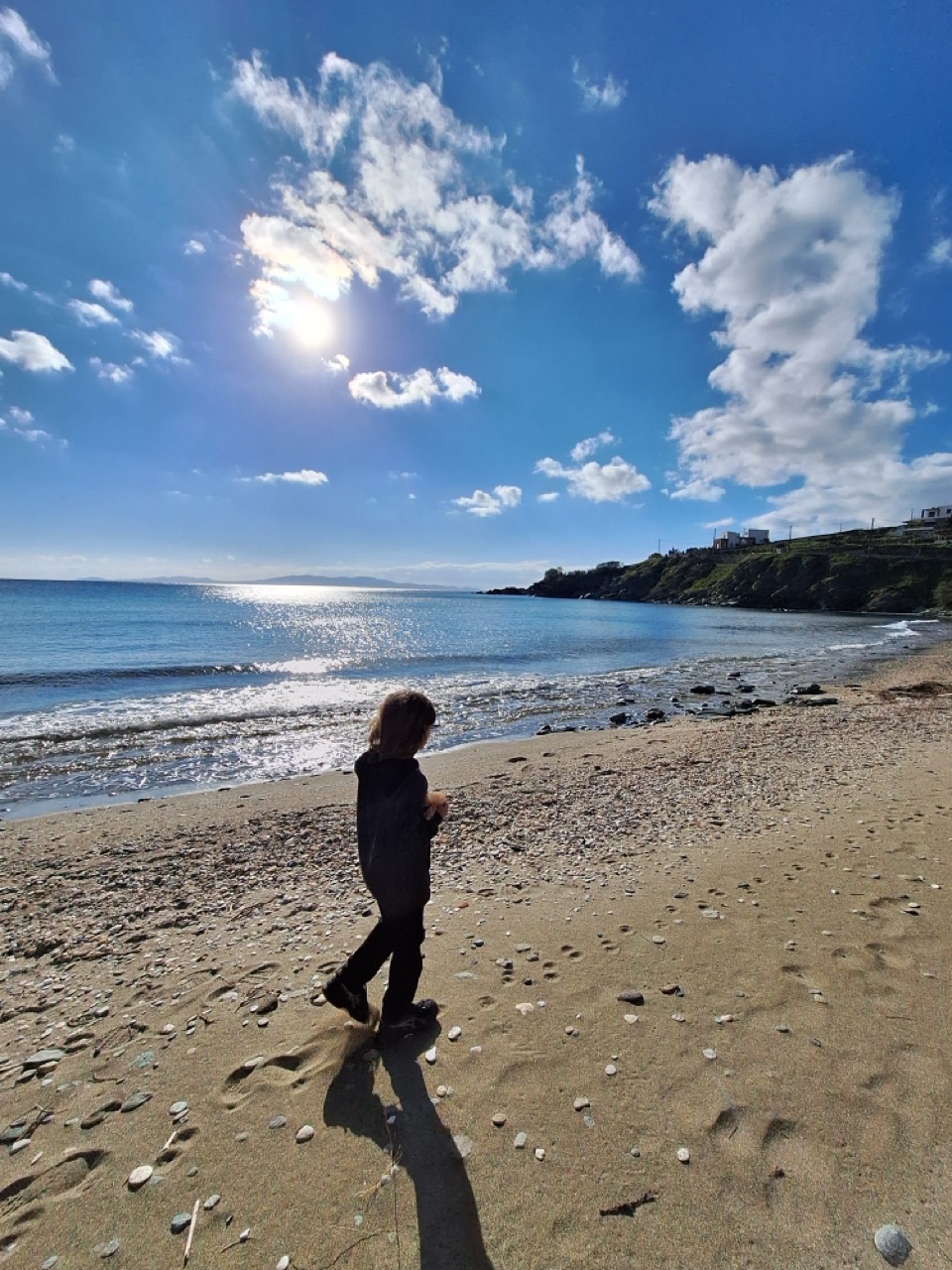
We live in Tinos as a family, and it has felt peaceful from the very first day. Life moves slower here, the beaches are gentle, and evenings are spent sharing food at waterfront tavernas while the kids play nearby.
It's the kind of place that doesn't try to impress you — it just quietly reveals itself. Traditional marble villages, hiking trails between churches, and a sea calm enough that the youngest swam on day one without hesitation.
What We Loved
— five thingsQuiet beaches with room to breathe
Plenty of space for kids to play, splash, and explore without crowds. Pachia Ammos, Kolimbithra and Porto kept us busy for days — each completely different in feel.
Authentic village life
Traditional marble-carved villages, local food, and the sense that families actually live here. Pyrgos and Kardiani felt untouched — cats everywhere, squares for the kids to roam freely.
Long, unhurried meals
Tavernas where no one rushed us and the kids could move around freely. Fresh fish at Thalassino, loukoumades in the morning, and a family that left every meal full and happy.
Cycling and hiking trails
We rented bikes early morning before the heat set in. The trails between villages passed through terraced vineyards, dovecotes and chapels. The kids were genuinely excited.
The ferry journey itself
Two hours from Rafina and Piraeus. The kids spent most of it on deck watching Athens disappear and Tinos grow. One of the best moments of the trip — and it wasn't even on the itinerary.
An afternoon on the old stone paths
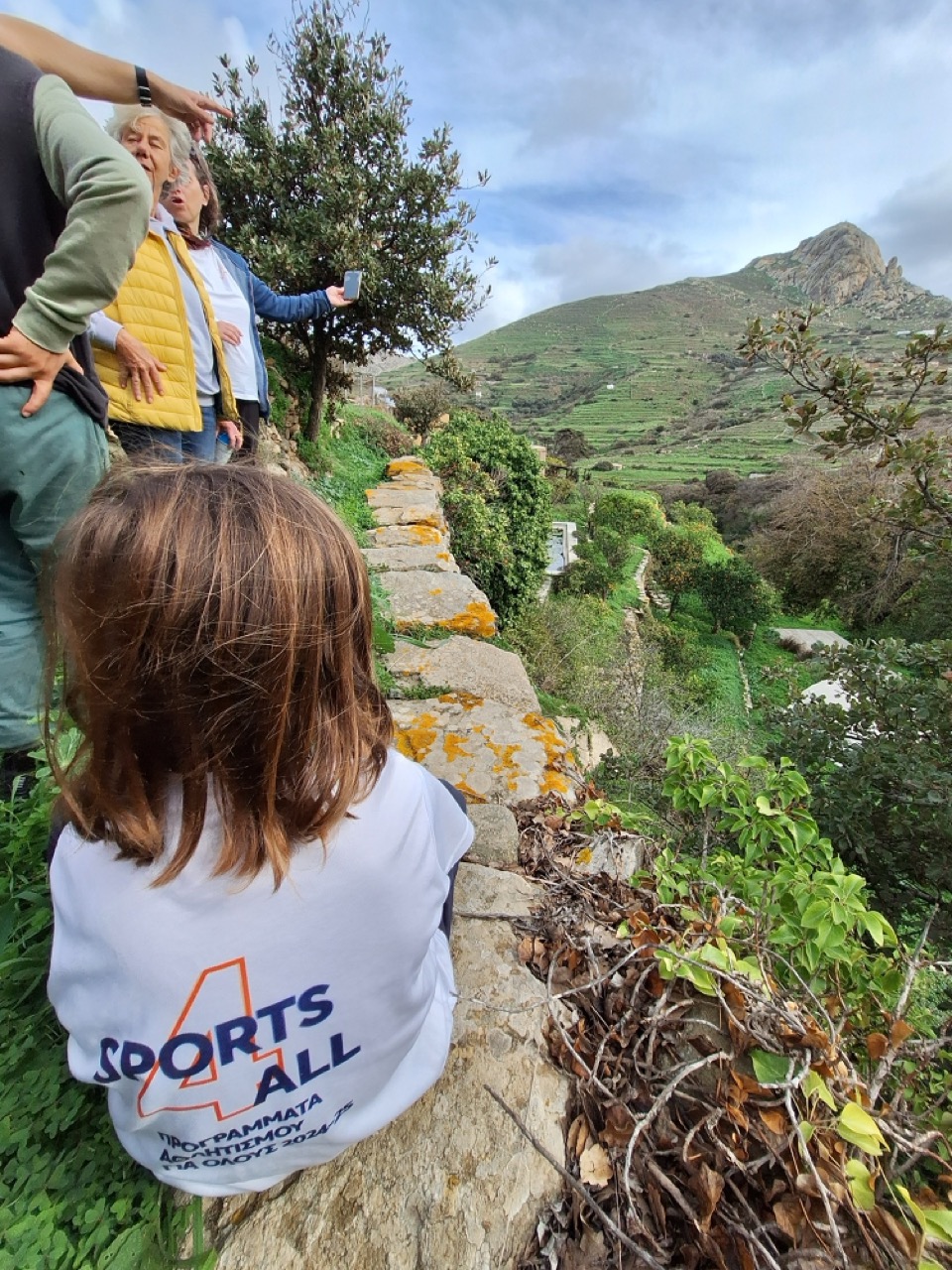
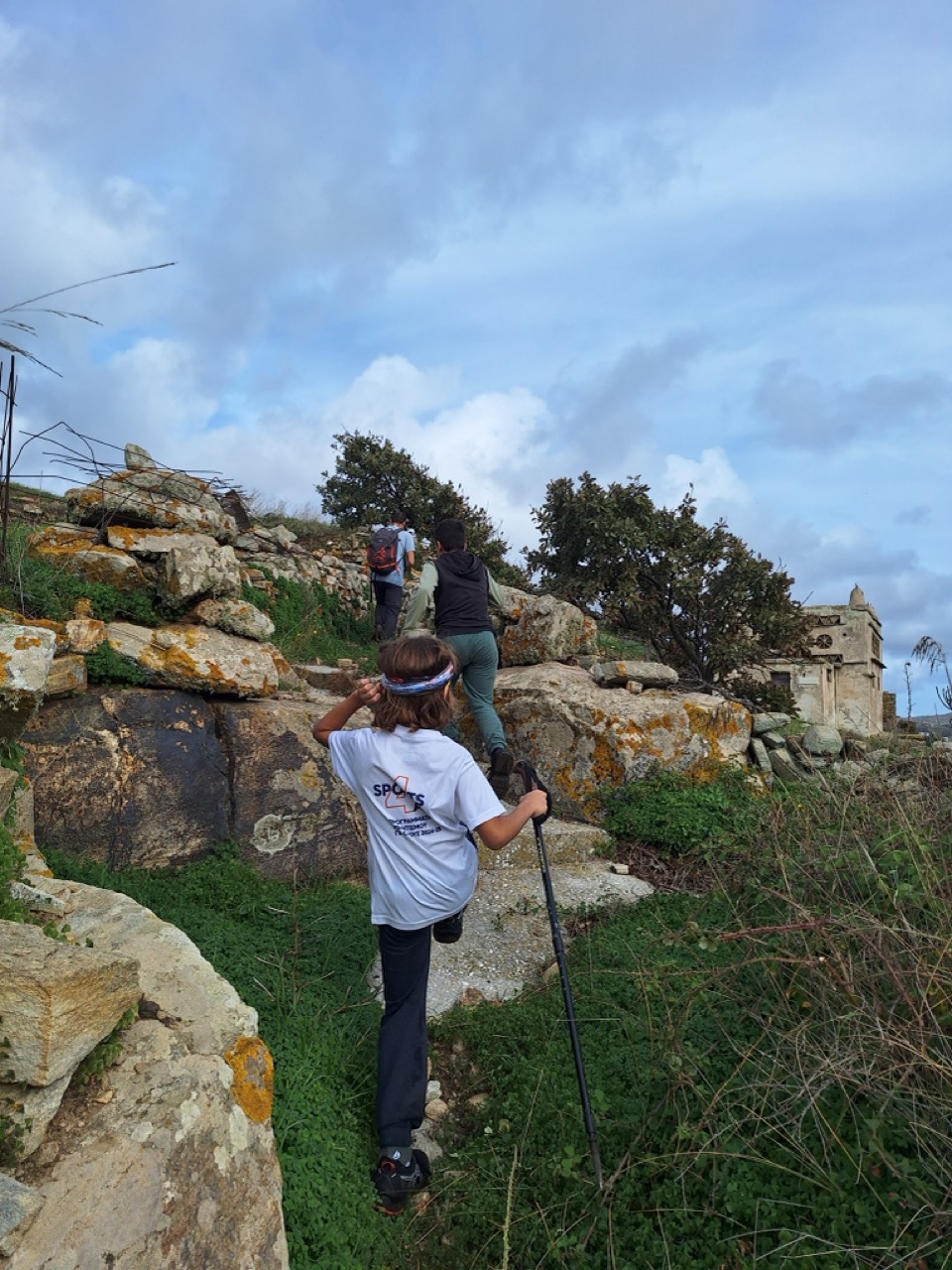
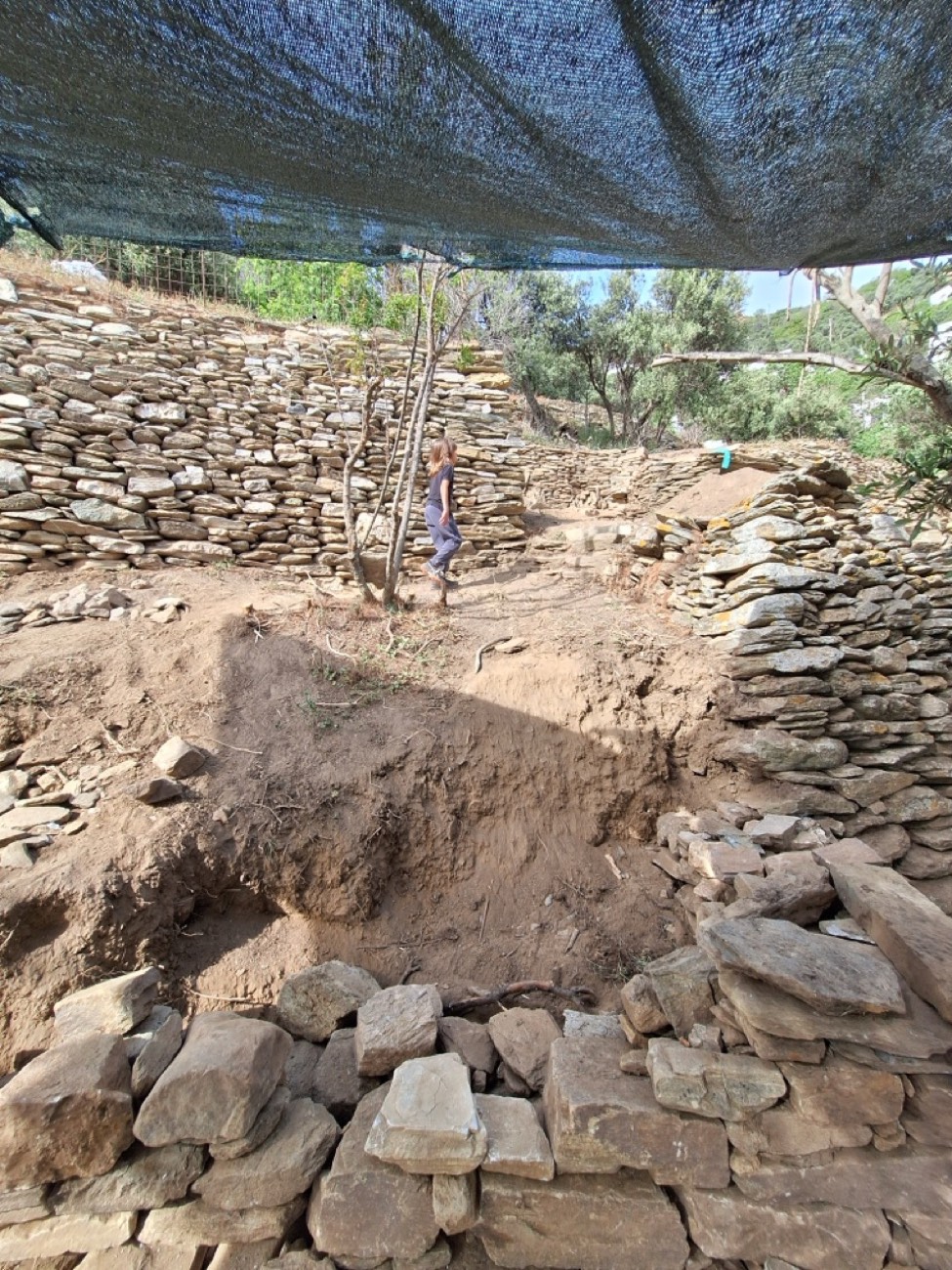
— 150 km of monopatiaTinos keeps its best secret in plain sight: a network of more than 150 kilometres of stone-paved paths — monopatia — that have linked its villages for centuries. One grey-bright afternoon we followed one of them out of the village, the kids ahead with walking sticks, our guide pointing out everything we'd have walked straight past on our own.
That guide was Manthos Prelorentzos. Born in Athens to Tinian parents and trained as a mechanical engineer at the Polytechnic, he changed course and moved to the island for good — lean, straight-backed and restless, a martial-arts teacher who set himself one personal wager: to prove that his grandparents' saying, that Tinos is the island of a thousand dovecotes and a thousand chapels, stands on the truth. Walk a path with him and you believe it.
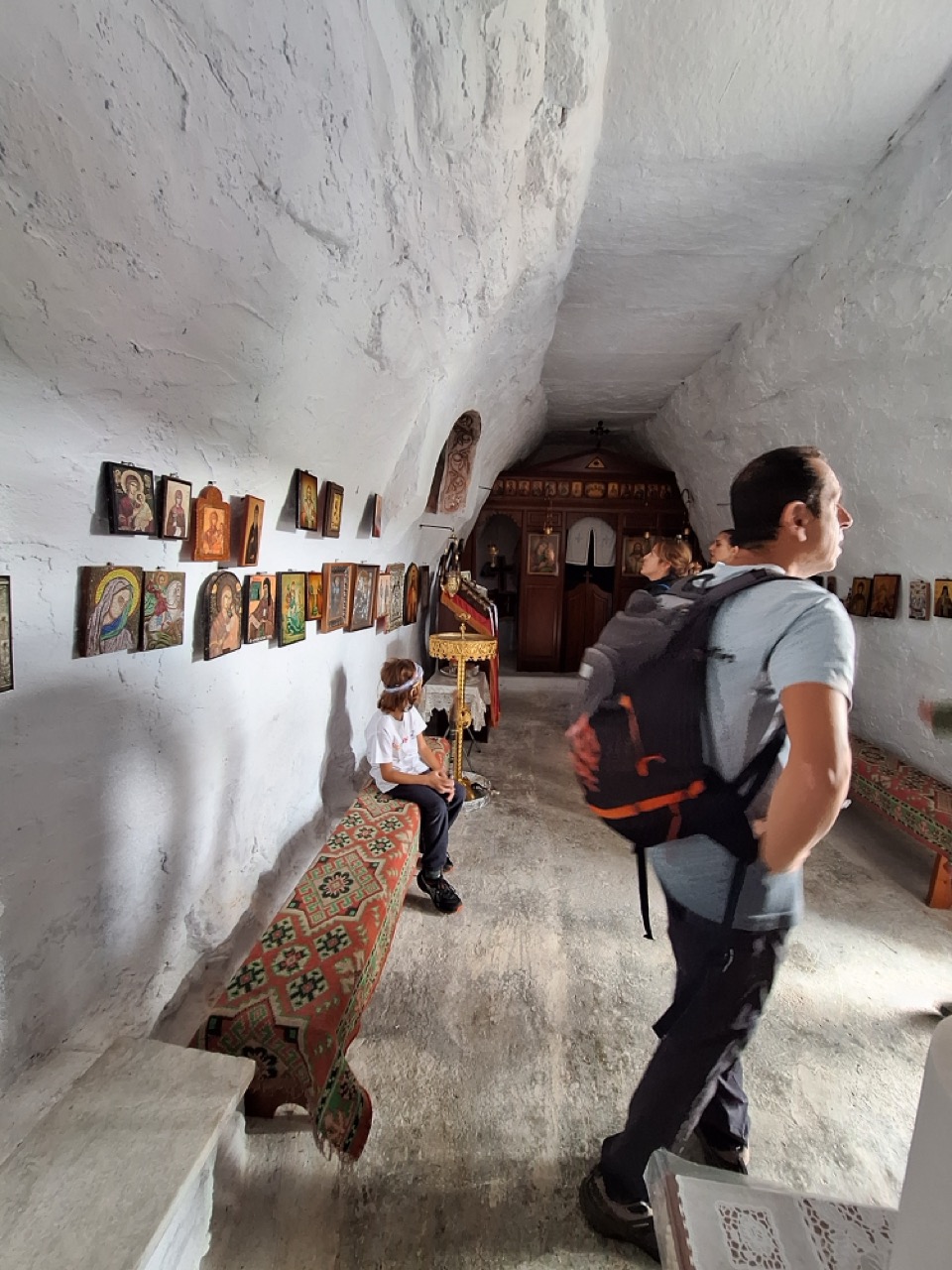
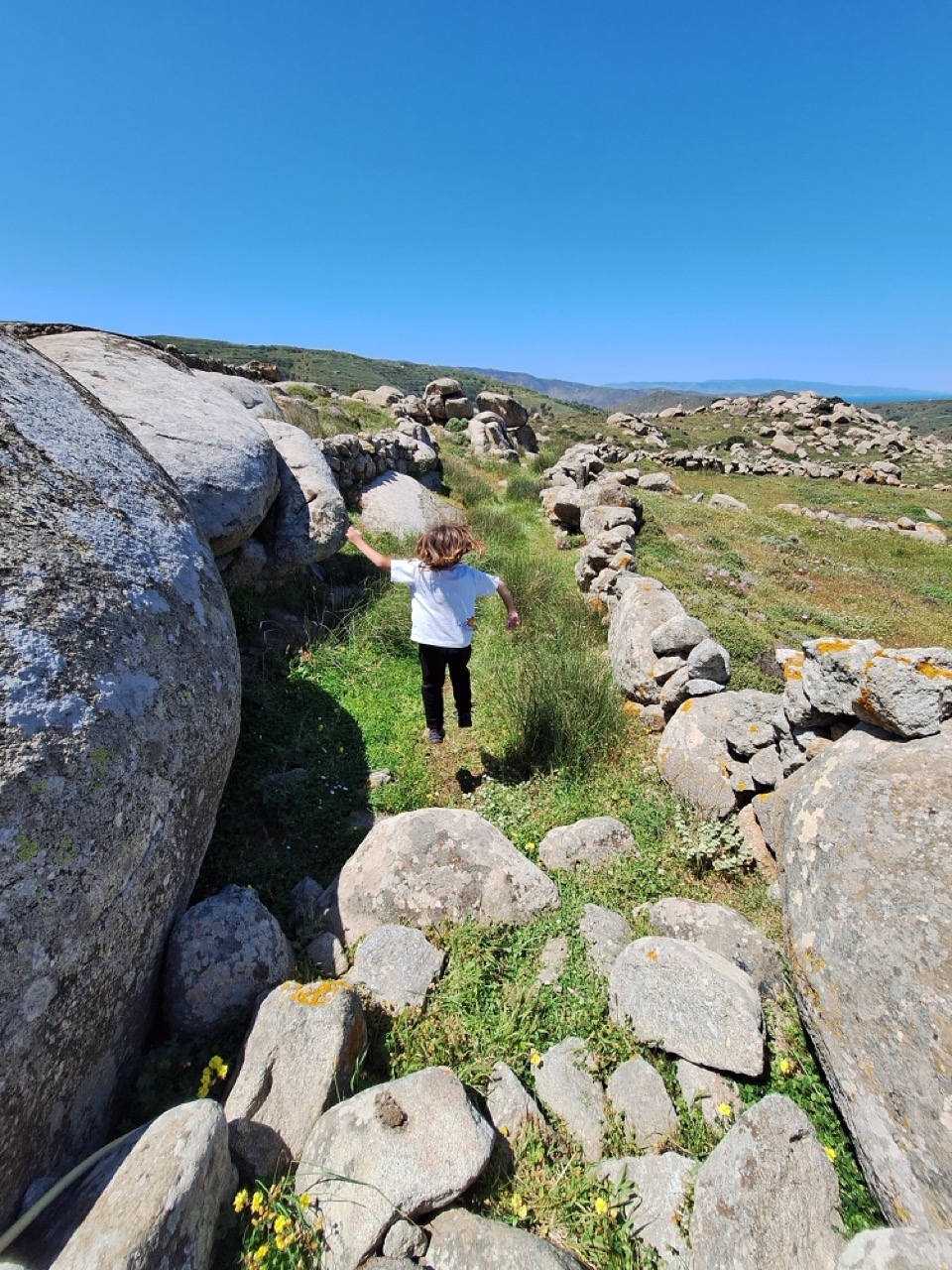
The path climbed in worn marble steps between dry-stone walls, past dovecotes carved with suns and diamonds and more tiny chapels than we could count. We stopped at one built straight into the rock — cool, whitewashed, its walls crowded with icons — and sat a while in the quiet before going on.
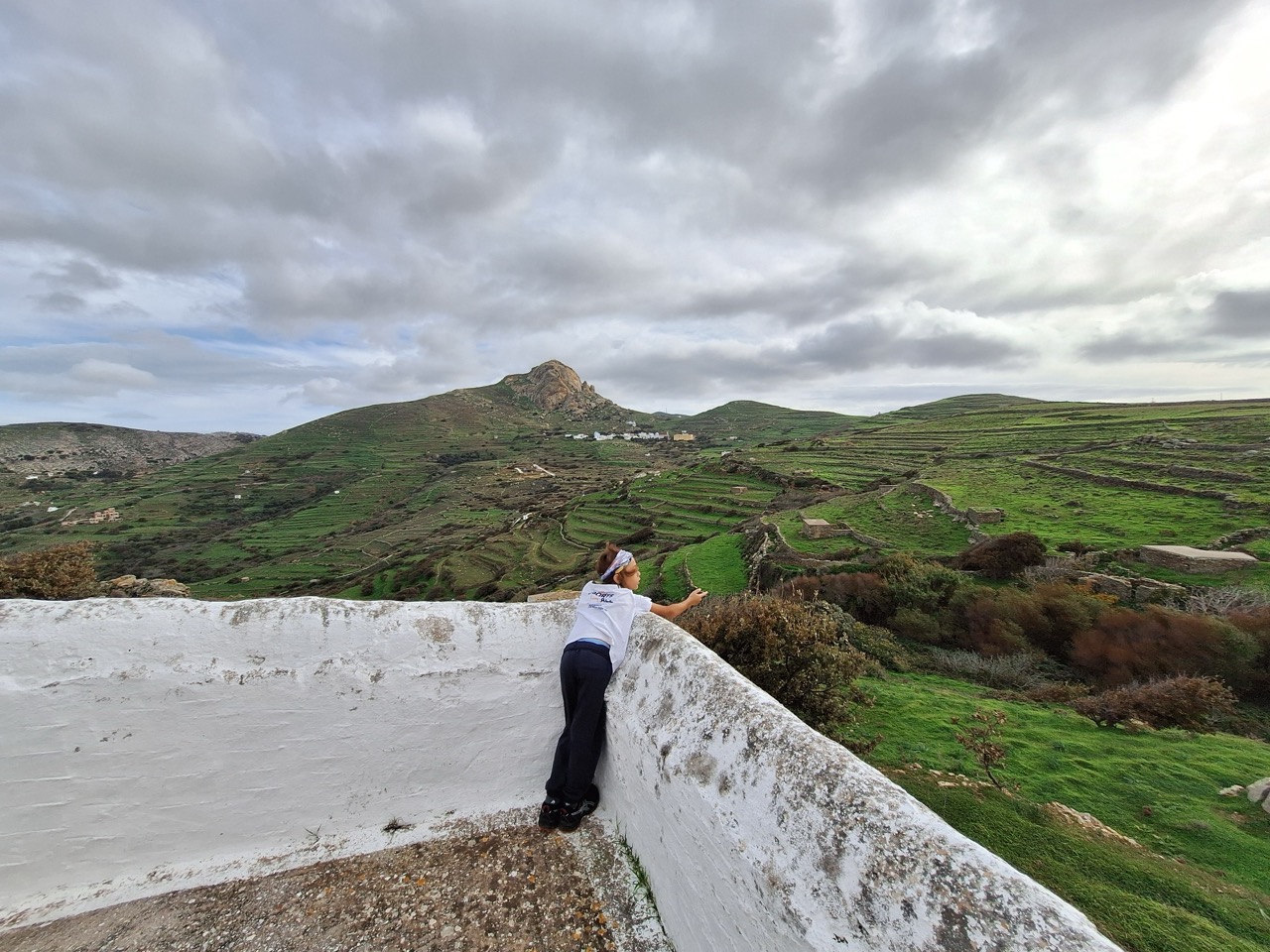
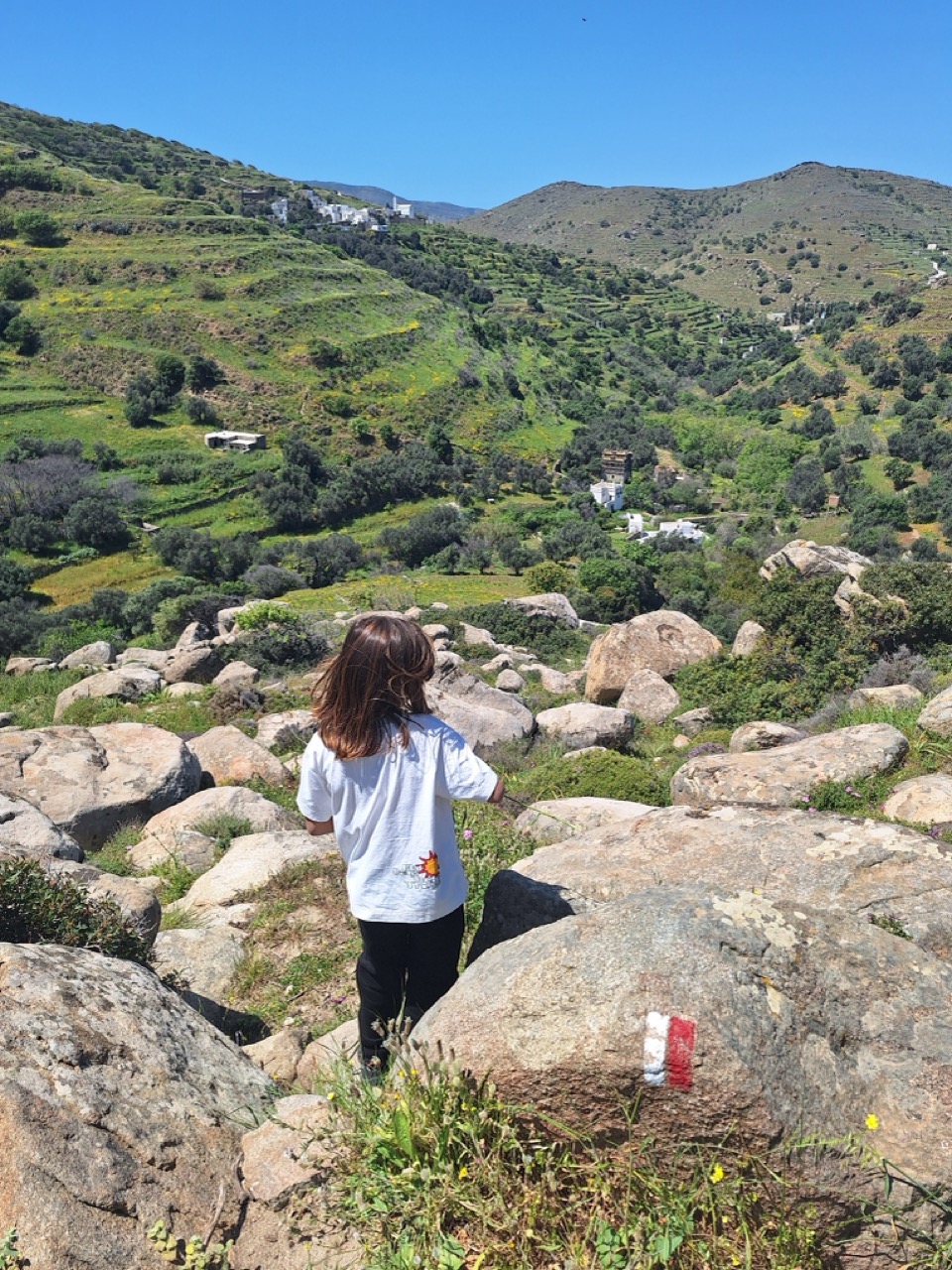
Higher up, the whole island opened below us: terraces stitched green across the hills, the granite crown of Exomvourgo on the skyline. The kids leaned over a low wall, picking out villages they suddenly recognised. No beach, no schedule — just an old path, and the feeling we'd walked into the real Tinos.
From the island
— real moments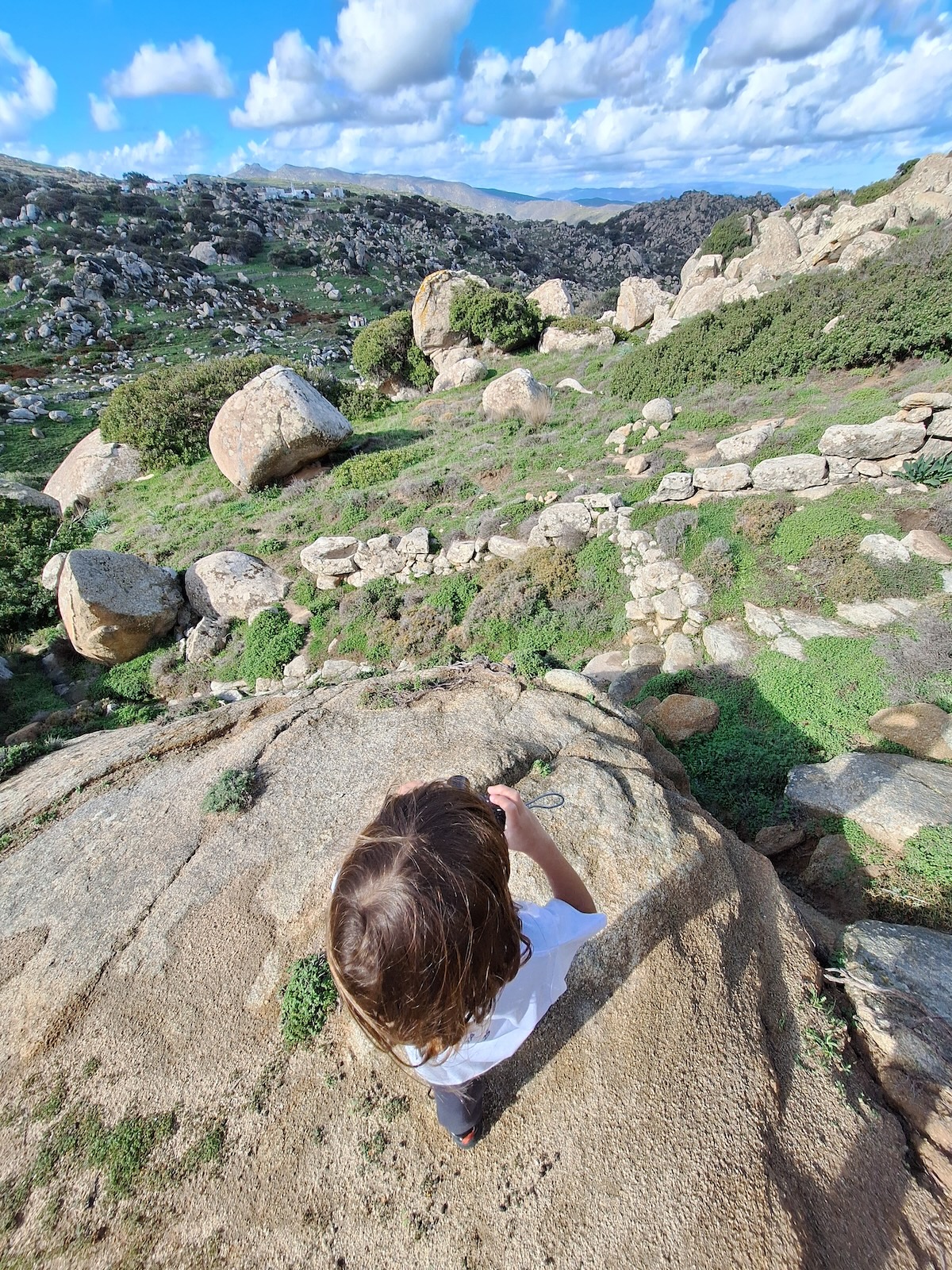
Tips we'd give ourselves
— before we left for TinosTinos rewards the families who slow down and find their own rhythm. Here's what made the difference for us.
Rent a car from day one
Buses exist but they're infrequent and don't reach the best spots. A small car unlocks the whole island — the marble villages in the hills, the wild north beaches, the hidden trails. Get it at the port the moment you arrive.
Book ferry tickets at least 2 weeks ahead
Ferries to Tinos run from both Rafina and Piraeus, and they fill up fast in summer, especially weekends. We booked the fast ferry (2h) and got seats on the upper deck — the kids stayed there the whole trip watching Athens disappear.
Kolimbithra for the wild side, Porto for calm
Kolimbithra on the north coast has dramatic dunes and bigger waves — the older one loved it. Porto Tinos is gentle and shallow, perfect for the younger. Go north in the morning when it's quieter, back to Porto for the afternoon.
Look up Ambassada Tinos
A community-led non-profit working to protect the island's dry-stone landscape and support sustainable local life. If you care about the place you're visiting — and want to understand what makes Tinos different from every other Cycladic island — their work is worth knowing about and supporting.
Drive the villages in the interior
Volax, Tarambados, Ktikados — the marble-carved dovecotes and stone villages inland are unlike anything else in the Cyclades. Give yourself a morning with no plan, follow the road signs, and stop whenever something looks interesting. The kids will find it surprisingly captivating.
Hike between Ktikados and Tarambados
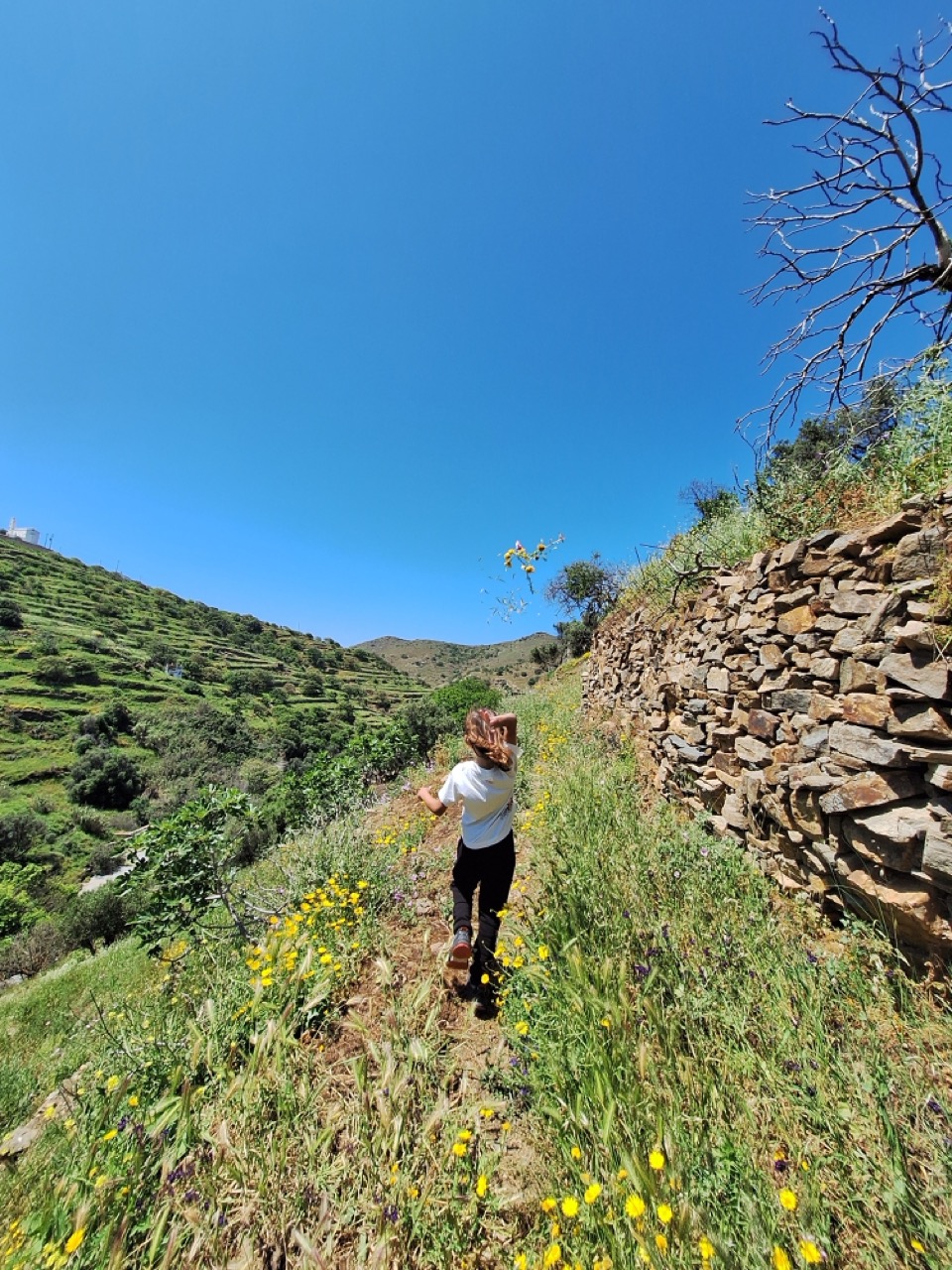
Short, doable with kids, and completely beautiful. Stone walls, dovecotes, wildflowers, and a view over the bay that stops you mid-step. Download the route on Komoot before you go — signal up there is patchy.
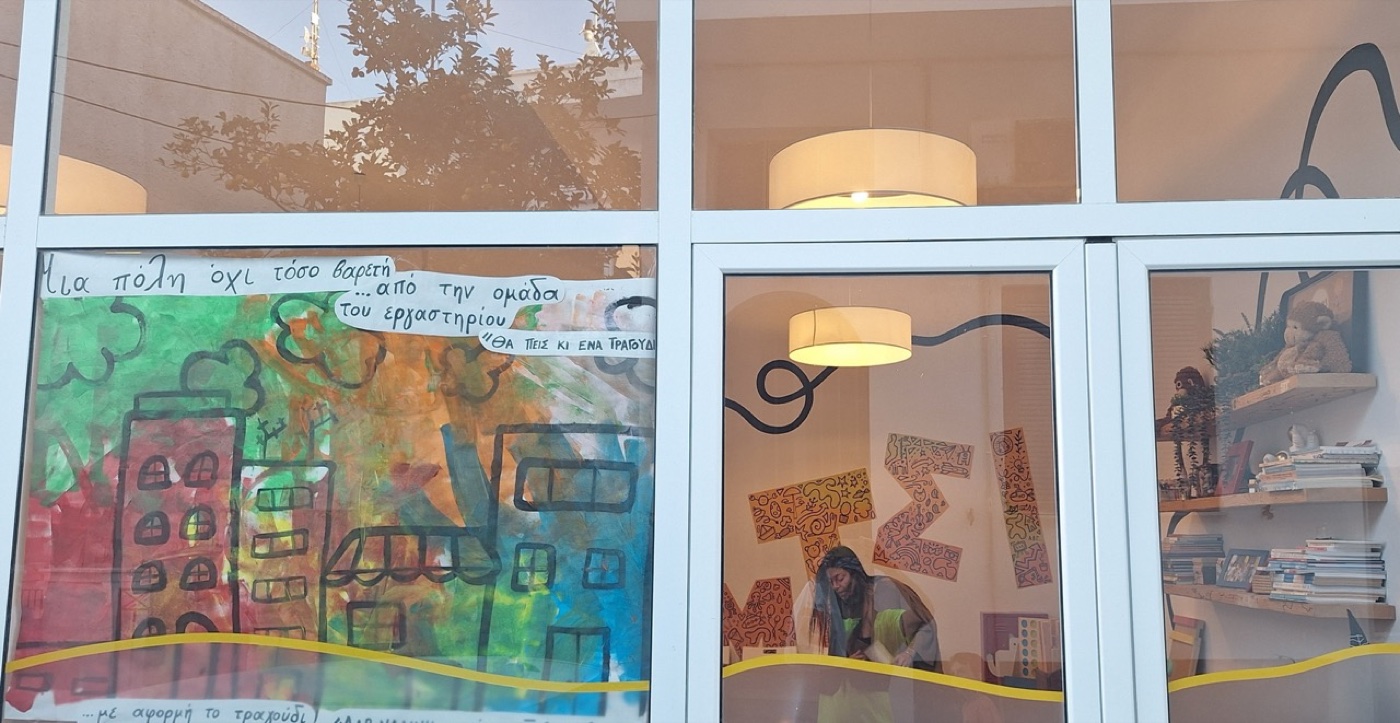
Τούμτσι — a creative workshop made for little hands
A highly regarded creative and educational workshop in Tinos, designed for children and toddlers. Hands-on art and making that genuinely holds their attention — that's their collaborative painted cityscape filling the window.
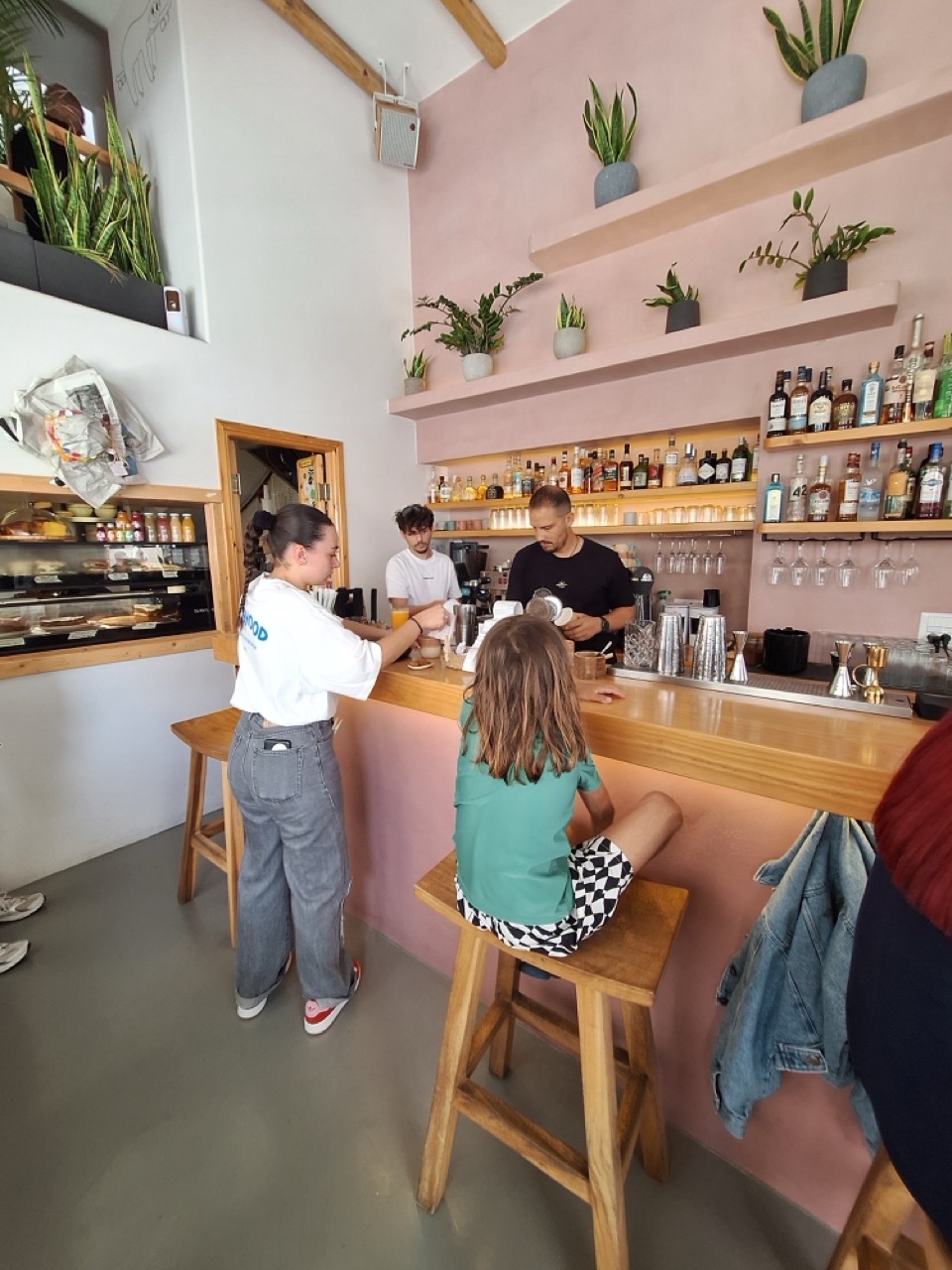
Holy Hood — the coffee stop you didn't know you needed
Tucked into a side street in Tinos Town, Holy Hood is the kind of café that feels like it belongs to you the moment you walk in. The coffee is genuinely excellent, the vibe is unhurried, and the kids can sit still long enough for you to actually finish a cup. We ended up here every single morning. Don't miss the cold brew on hot days — it's as good as anything you'd find in a city, in the middle of a Cycladic island.
Marathias — the seafood taverna worth a slow afternoon
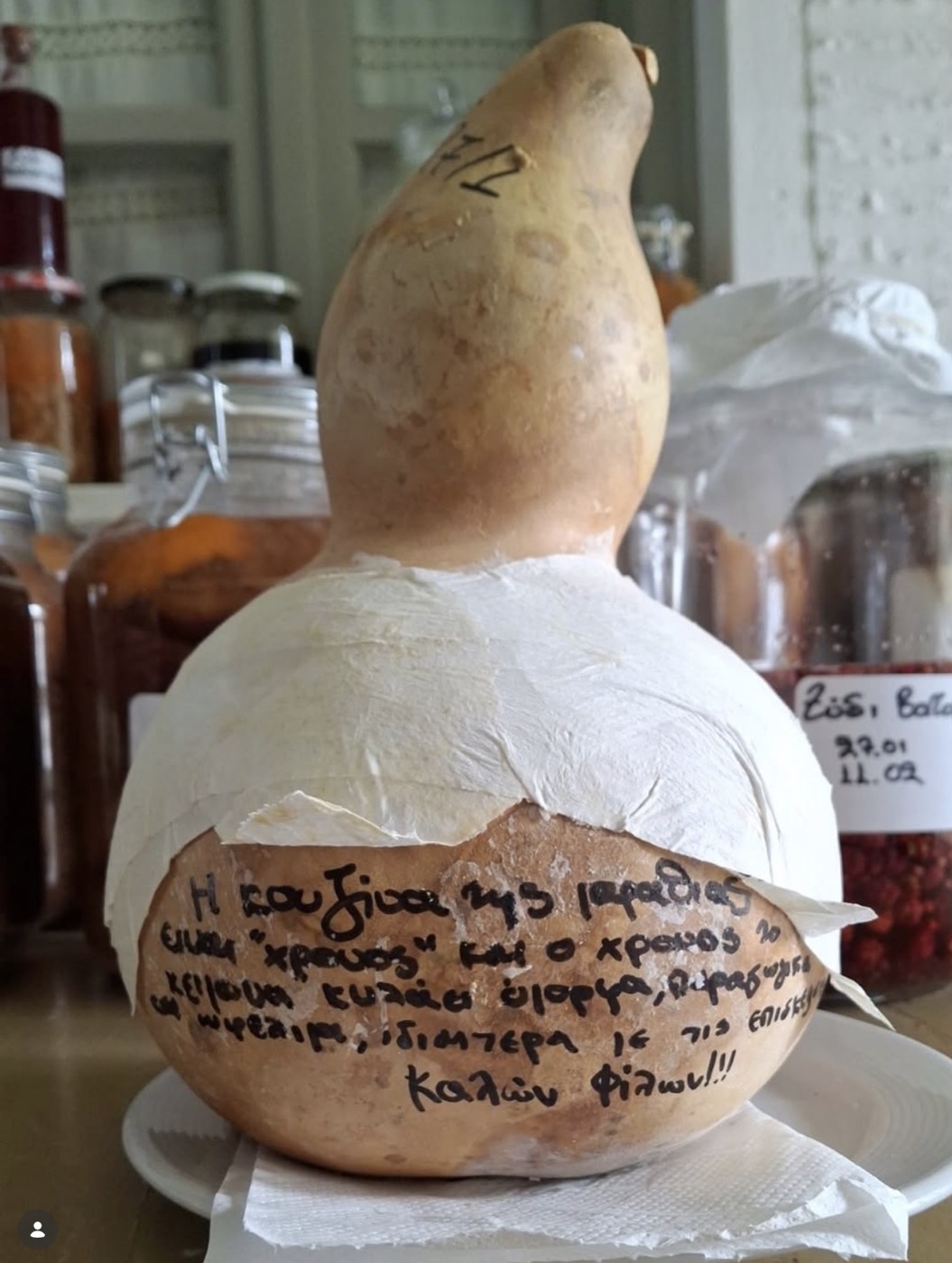
An award-winning seafood taverna right by the beach, built around foraging and supporting local producers. They cure, pickle and preserve their own — shelves of jars line the kitchen — and you can taste it in every plate. There's a family-run guesthouse attached too, so a long lunch can easily turn into a stay.
How we planned Tinos with the kids
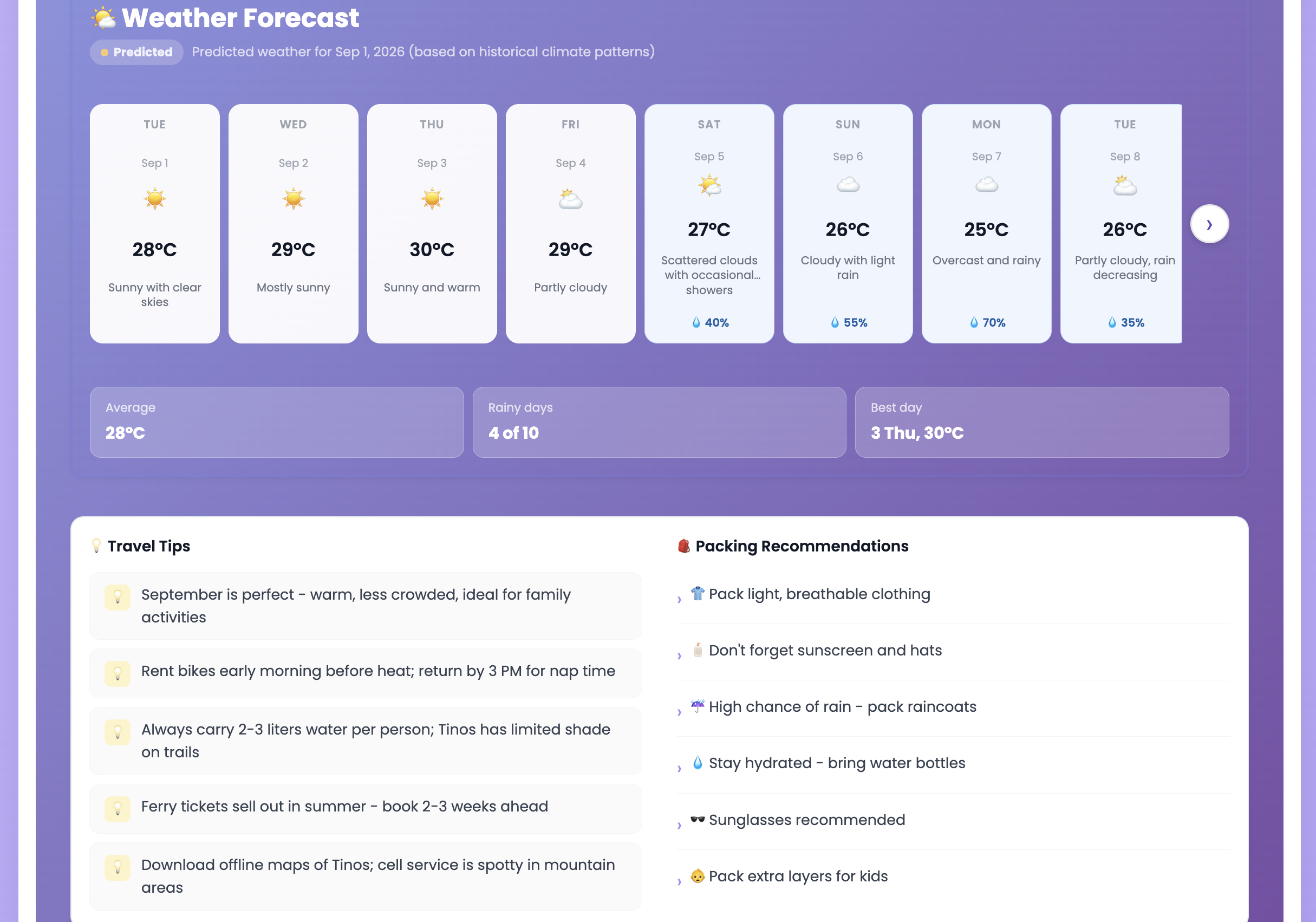
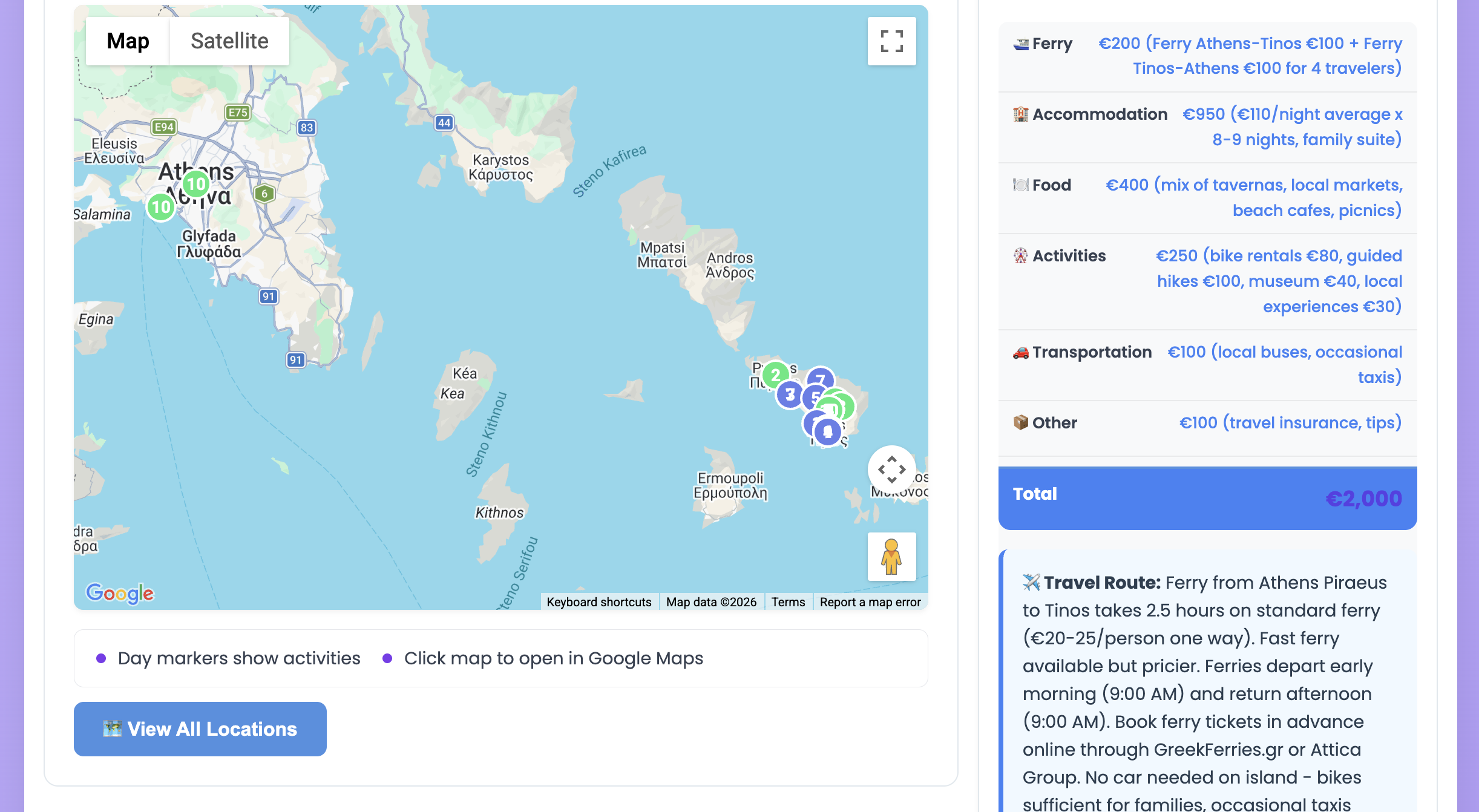
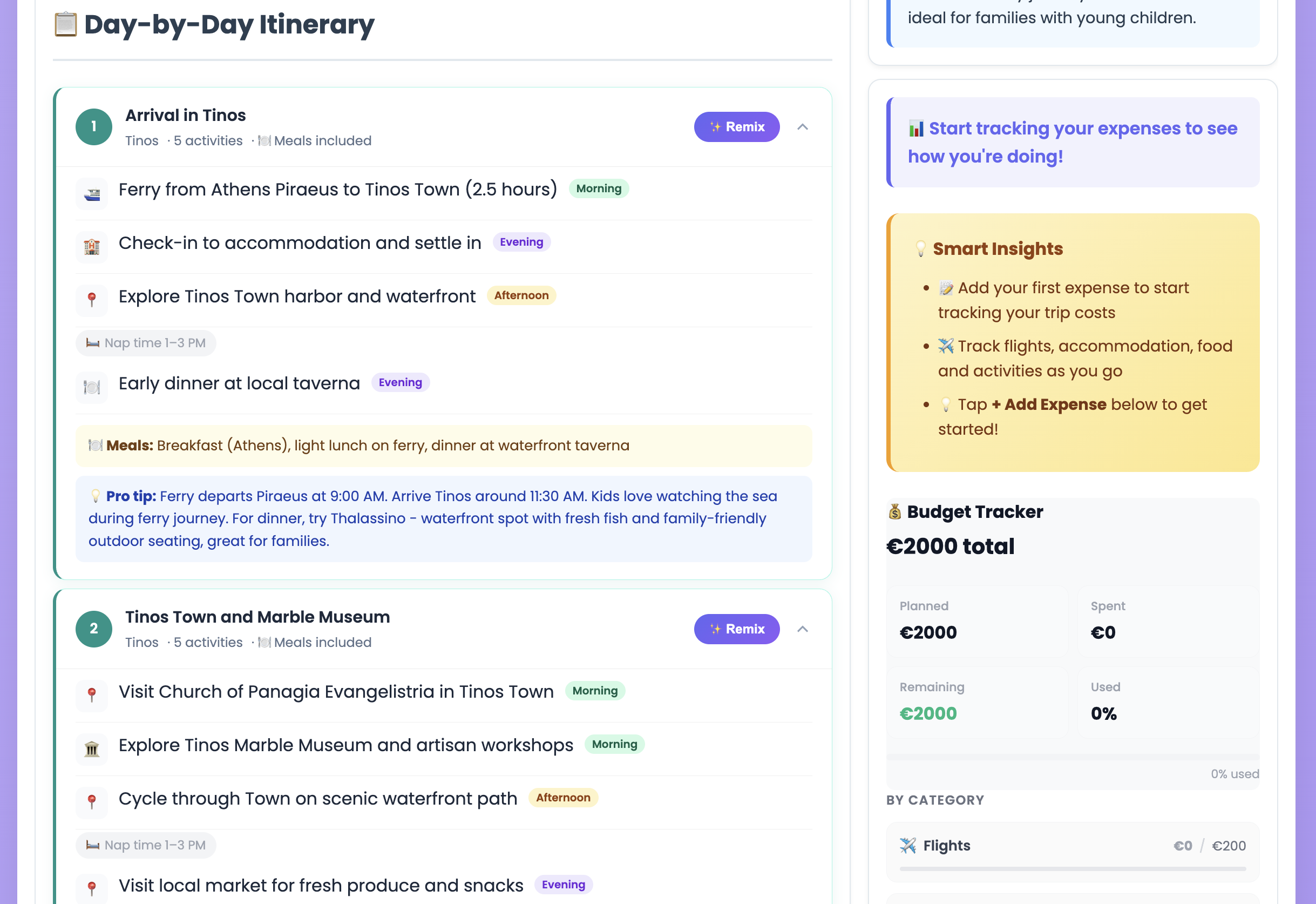
We used Famila.Travel to plan the whole trip — telling it we wanted hiking, beaches and local culture, with kids ages 5 and 8. It built a 10-day itinerary with nap schedules, predicted September weather of 28°C, and even flagged that ferry tickets sell out in summer.
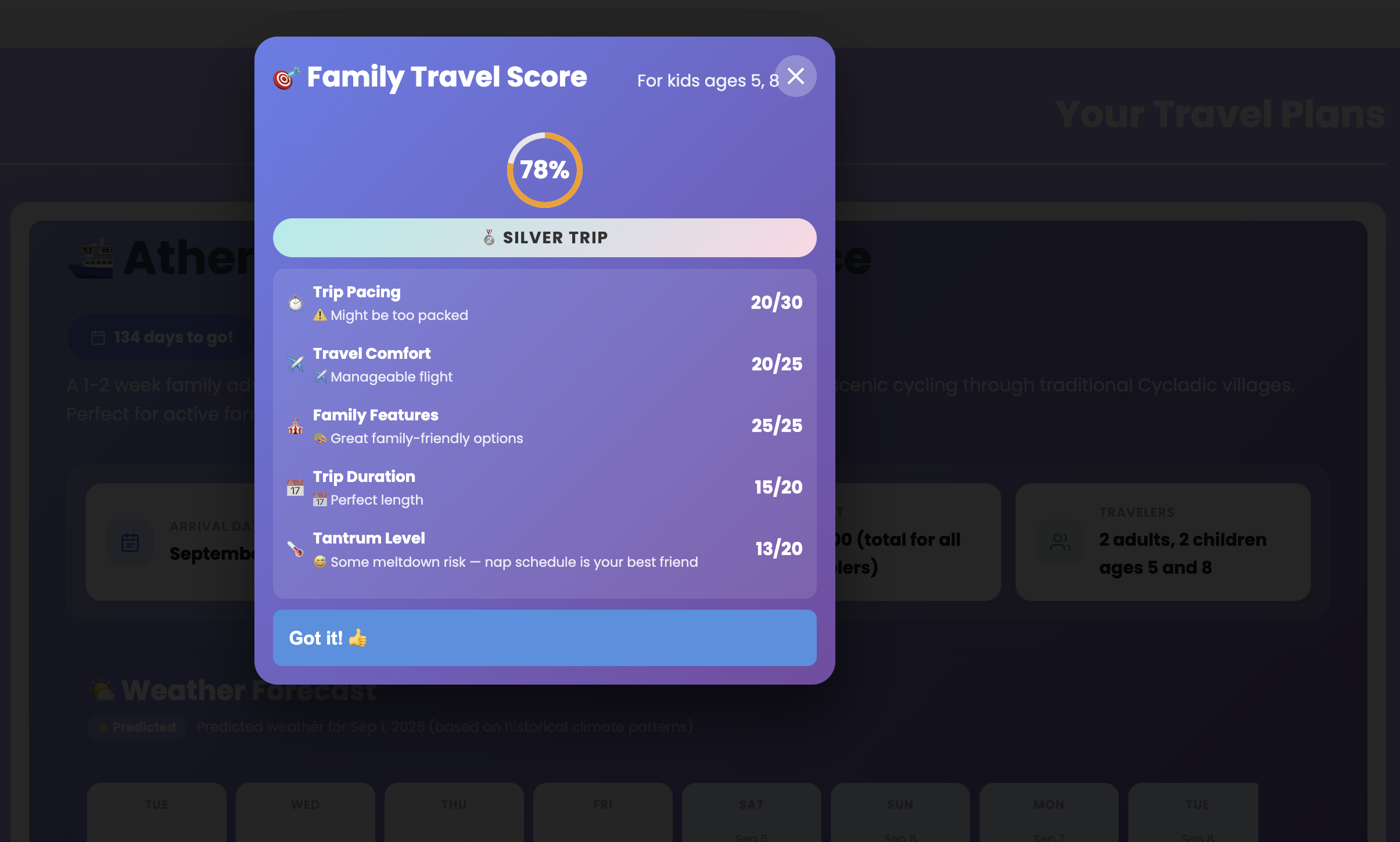
The Family Travel Score gave us a 78% — Silver Trip — noting that the pacing might be slightly packed. We used that to slow down days 6 and 7 and add beach time.
Plan your own
island escape
Tell Famila.Travel where you want to go. It handles everything else.
⛴️ Start Planning Free